
I received a request a few weeks ago that changed my perspective on the scope of what we do at Science with Impact completely.
And it all comes down to one little, highly toxic molecule:
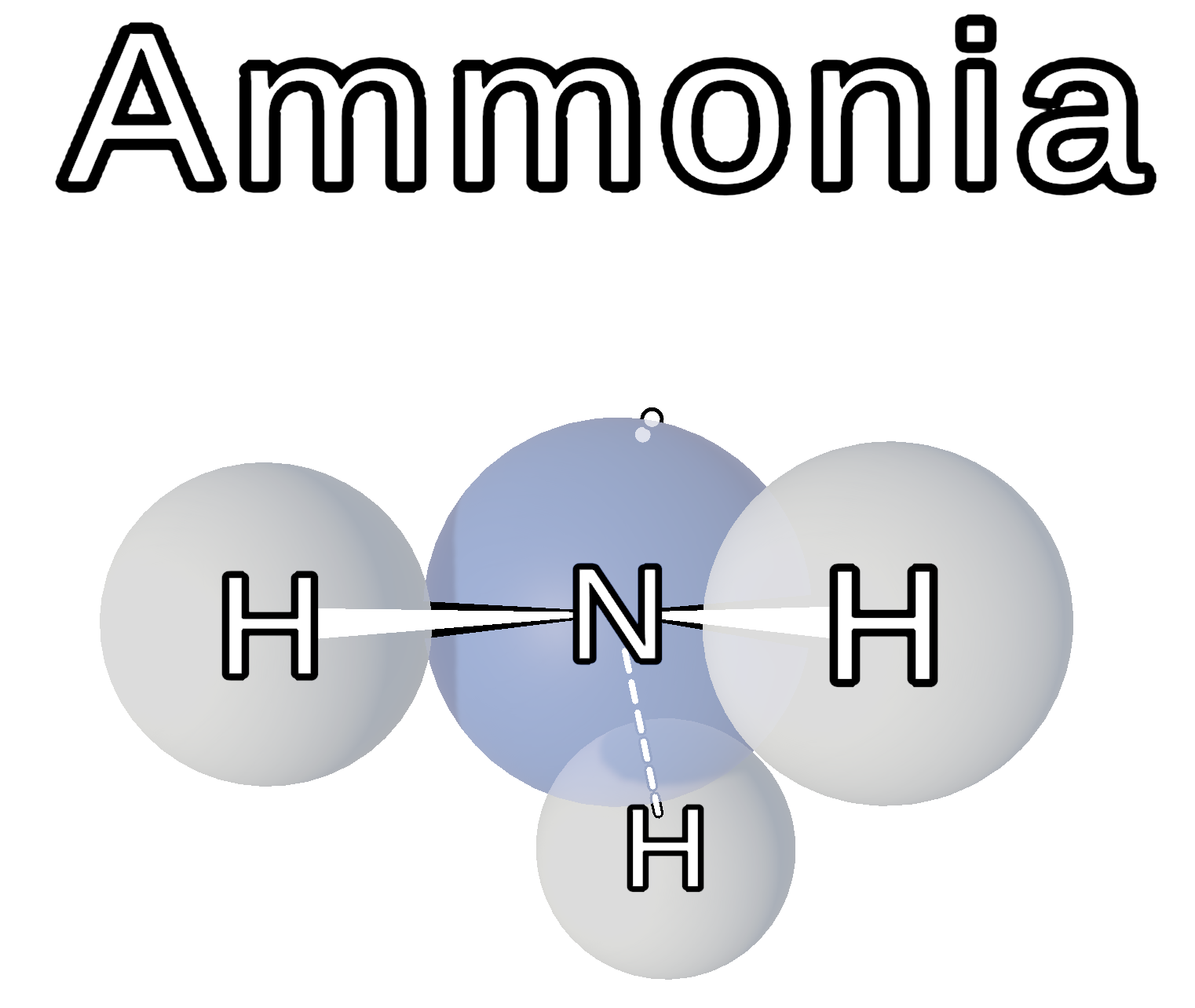
Imagine a critically ill patient: Comatose. Blood urea nitrogen (BUN) is low, ammonia is high, and glucose is low. Lactulose and rifaximin (front line medications) are not working.
What do you do?
Michael Rothkopf, MD asked for a simulation tracing the 2 nitrogen atoms (from ammonia and aspartate) through the urea cycle. Not necessarily for students, but for physicians to potentially deduce the life-saving diagnosis of arginine deficiency from visualizing the cycle.
🔢 This post is Part 1 of Urea Cycle Case Study: a series focused on the development of this custom scene using parts of the Genesis βeta.
Programming each of the 23 structures
I authored this urea-cycle set using my Genesis βeta — including amino acids, nucleotides, and urea as the amide (C=O, two C–N singles, planar –NH₂).

💬 Side Note: If you happen to need these, all 23 are available for download here. Please feel free to examine and comment for improvements, I’d love your support and an extra pair of eyes on this).
Here’s what we’re working towards - cyan rings on the nitrogens and enzyme names on the path:
Exploring The Urea Cycle by Vanessa Rosa, Ph.D.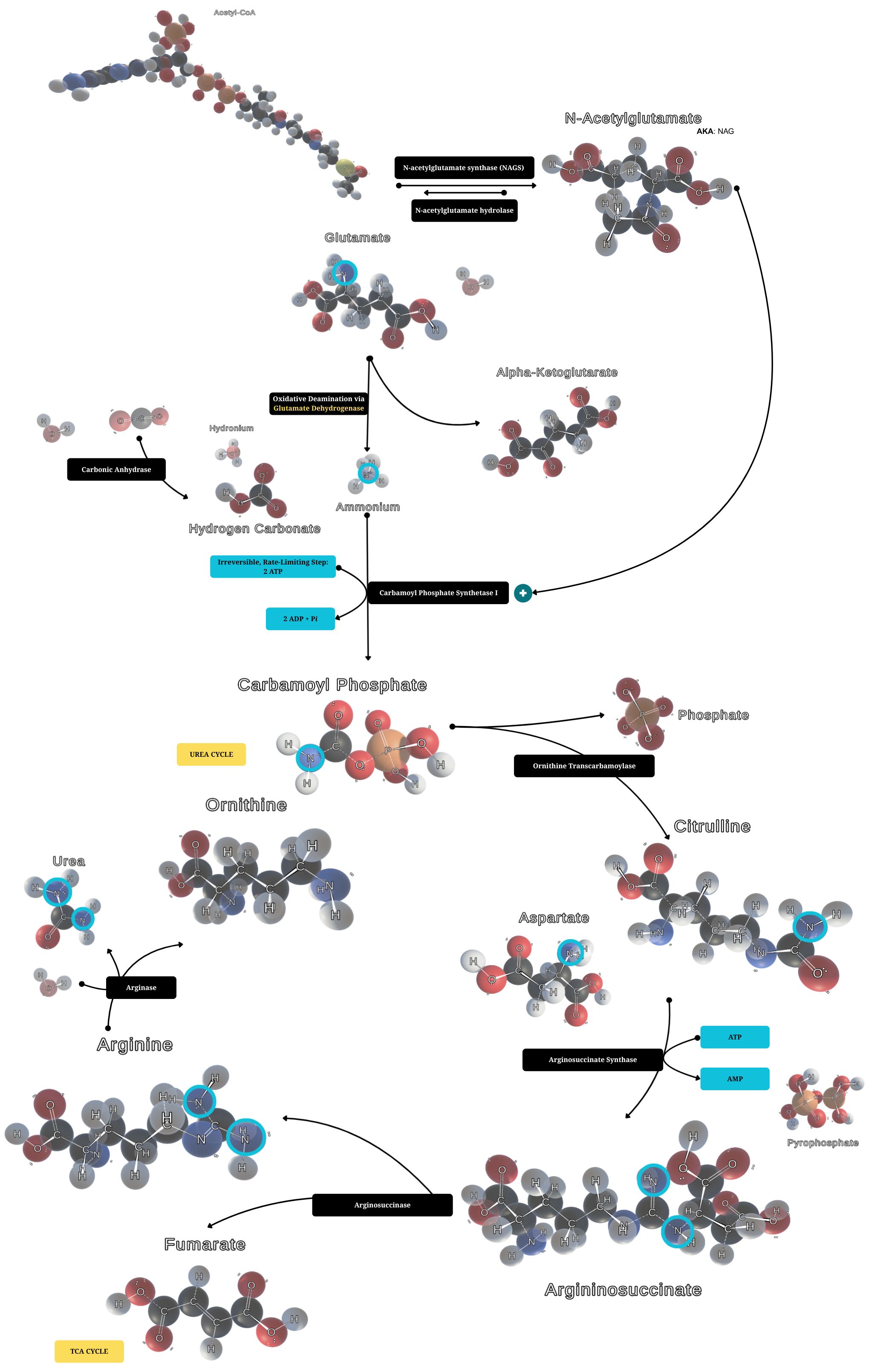
The idea is a button on each step so the intermediates rearrange along the cycle, with nitrogens kept visible — once for a working cycle, once for an arginine deficient cycle. Arginine deficiency stalls the cycle: nitrogens from carbamoyl phosphate and aspartate are not carried through, ammonia rises, and less fumarate reaches the path that supports gluconeogenesis.
A question about complexity
It can be difficult to walk the edge of:
- Enough information for clear comprehension, and
- Missing information leaving gaps in accuracy and "rigor"
There are levels to this one:
- Do I import the PDB files of the enzymes involve to show enzymes or substrates at the active site?
- Do I animate fairly large energy or oxidation cofactors (e.g., ATP/ADP/AMP, NADH/NAD+)?
- Should I simulate each multi-step reaction/transition state required to synthesize the intermediates?
I’d love your insight (feel free to reply) but here’s where I stand on it for now:
If it is essential to include to understand where the nitrogens of this cycle came from or are going, then I’ll include it. This is why glutamate metabolism is included despite not formally being part of the urea cycle.
Try it out
Spawn an intermediate in Genesis — water, CO₂, or N-acetylglutamate, etc. — you can export as PNG, MP4, or GIF for your slides and request new structures right in the app (no sign in, no email required, openly available).
 Vanessa Rosa, Ph.D.
Here’s the perspective shift
I knew I was making visuals/simulations for chemistry to “surface the mechanism” and make the molecular underpinnings of this glorious universe more visible, accessible, and relatable. What I did know, what that my work could have an impact being sparking understanding and curiosity, possibly even all the way toward saving a life.
I’m honored and excited to keep working at the feat of coding and education that is Project Genesis and hopeful you’ll stay tuned for what we (me, the team, and each of you) do next.
Thank you to Michael Rothkopf, MD, for the clinical ask.
It's a beautiful day to practice impactful science,

P.S. Someone asked for me to print these structures onto vinyl re-stickable structures as a teaching/learning aid. If you want one too, please reply with which molecules/mechanisms/pathways you’d want first.
P.S.S. We’ve been invited to submit a Phase I proposal to the U.S. National Science Foundations Small Business Innovation Research (SBIR) solicitation generalizing the Genesis engine so scenes like this take less custom rebuild work. If you’d be interested in writing a support letter, collaborating, or learning more, please feel free to write!
Series List:
- Current: Urea Cycle Case Study — Part 1 of a build-in-public series
- Next: Subscribe for Part 2+ (steppable metabolic pathways)


Member discussion