As chemists, our success depends heavily on our ability to communicate complex, multidimensional processes to grant reviewers, students, industry partners, and the public. To do this, we often simplify our science into letters, lines, and wedges.
But this simplification creates an invisible barrier: cognitive load. Every time we reduce a dynamic 3D process into a static 2D image, we force our audience to simulate the spatial dynamics and movement in their own minds. If they aren't experts in our specific subfield, that imagination gap can lead to lost funding, confused students, or disengaged audiences.
The most powerful way to make your chemistry "click" is to externalize that imagination process. Here is a guide to the four levels of chemistry visualization, the best digital tools for each stage, and how shifting to fully interactive models can tangibly measure the impact of your research.
Level 1: The 2D Blueprint
Two-dimensional representations, like Lewis structures, are the essential baseline for written communication between chemists. They are the blueprints of our field.
- The Tool: Beyond drawing by hand, tools like Alchemie offer highly accessible interfaces to connect elements and demonstrate electron sharing.
- The Opportunity: 2D is perfect for teaching the written language of chemistry and documenting static structures.
- The Limitation: It lacks spatial context, requiring the viewer to visualize the 3D geometry internally.
Level 2: The 3D Sculpture
The next natural step is to add depth, taking the 2D blueprint and turning it into a 3D sculpture.
- The Tool: MolView is fantastic for this. You can search or draw structures and instantly see the spatial volume they occupy in 3D.
- The Opportunity: This solves the spatial geometry problem, allowing viewers to see the actual shape and steric hindrance of an isolated structure.
- The Limitation: Sculptures are static. A mechanism is a process driven by energy and time, and a standard 3D render is just a single snapshot.
Level 3: The 3D Animation
To show how chemical species interact, we add the dimension of time.
- The Tool: Blender is widely used because you can import PDB structures and manually animate them using keyframing.
- The Opportunity: Animations are beautiful and highly effective for keynote presentations or videos where you want to control the narrative perfectly.
- The Limitation: It is incredibly time-intensive to learn and execute well. More importantly, it is a passive experience. The viewer just watches; they cannot rotate the molecule, change conditions, or ask, "What if?" Furthermore, it is very difficult to measure how well the audience understood a passive video.
Level 4: The Dynamic Simulation
This is where we move from showing chemistry to letting the audience do chemistry.
- The Tool: Platforms like PhET (from CU Boulder) are excellent for teaching broad concepts. But to visualize highly specific, novel research, we developed the Genesis physics engine.
- The Opportunity: By programming a web-based engine with fundamental chemical logic (like valence and electrostatics), we allow the engine to handle the physics while the user directs the action. Your audience can manipulate variables, explore cause-and-effect relationships, and test hypotheses in real-time.
Measuring Impact: The Interactive Advantage
When you hand someone an interactive simulation, every mouse click becomes a data point. You are no longer guessing if your audience understands your work—you can measure it.
Recently, in a collaboration with The NSF-Funded Center for Chemical Innovation: Molecularly Optimized NETworks (MONET) and the American Chemical Society Kids Zone (shout out to Ayanna Lynch, Rachel Creager, and Patti Galvan!), we used the Genesis engine to turn a standard "slime" demonstration into a hypothesis-testing digital sandbox. Kids added bond breakers and chemical connectors to see how molecular interactions changed material behavior.
The results were striking:
- Users spent an average of 2.5 minutes deeply engaged with the digital simulation in a highly chaotic outreach environment.
- Pre/post evaluations showed a 400% increase in participants using accurate mechanistic chemistry language (like polymer, borate, and hydrogen bond) to explain the phenomena.
 Vanessa Rosa, Ph.D.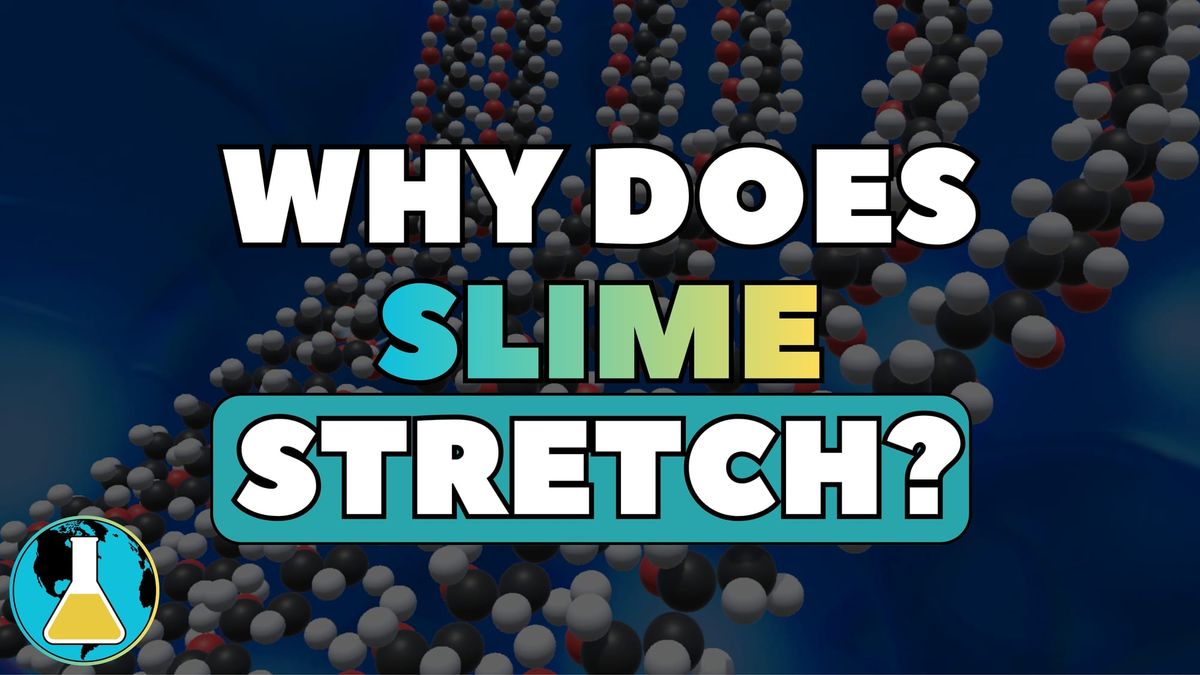
Click the image to read the case study.
We’ve seen similar engagement applying this technology to university curricula, such as our interactive pharmaceutical learning dashboards built for the University of Florida, which allow students to change conditions and see the chemistry respond in real-time.
Bring Your Mechanism to Life
You shouldn't have to spend 50 hours learning animation software to ensure your next NSF grant panel or classroom understands your mechanism.
At Science with Impact, we partner with researchers to translate their work into vendor-approved, interactive 3D web simulations. Delivered in a transparent 21-day sprint and scoped to your available grant allocation, we provide the frictionless web links and the hard engagement metrics you need to prove your broader impacts.
Vanessa Rosa, Ph.D.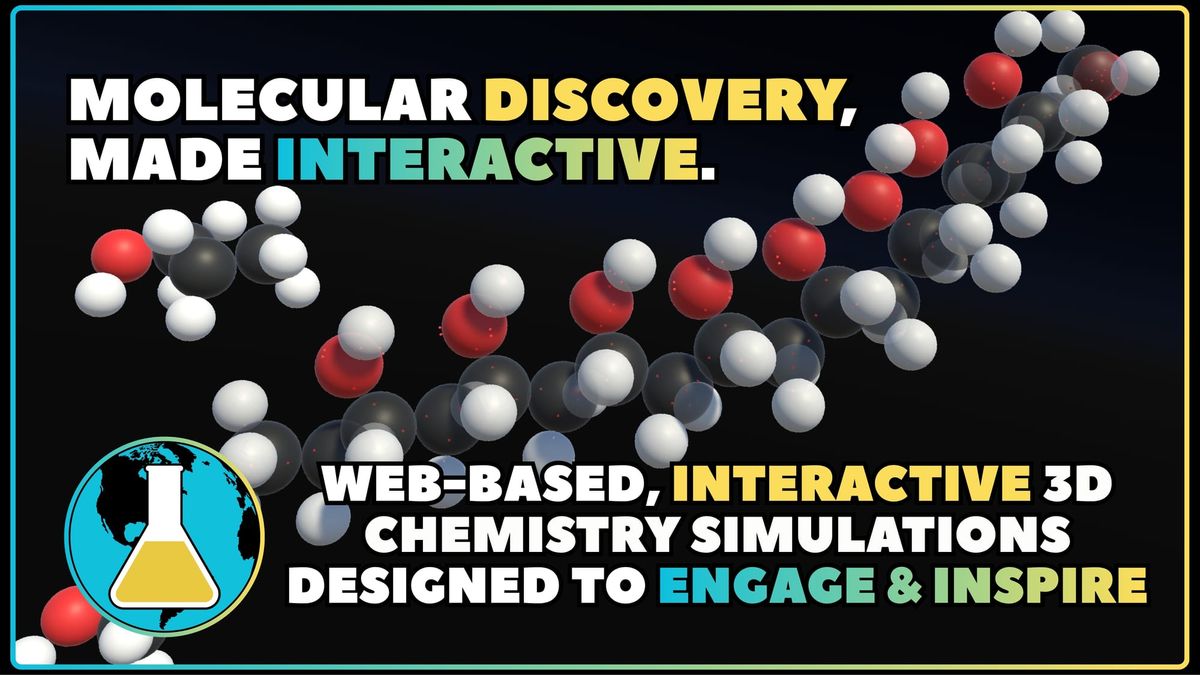
Click here to see the Genesis engine in action!
Ready to surface the mechanism behind your own research? Explore our prior collaborations with MIT, Duke, and Johns Hopkins, and request a project consult here.


Member discussion