The Challenge: The NSF Center for Molecularly Optimized Networks needed a Broader Impacts activity for the ACS Kids Zone that didn't just entertain, but measurably taught the mechanics of polymer cross-linking.
The Solution: A custom 3D Interactive WebGL game challenging users to connect polymer strands using borate ions to create virtual slime.
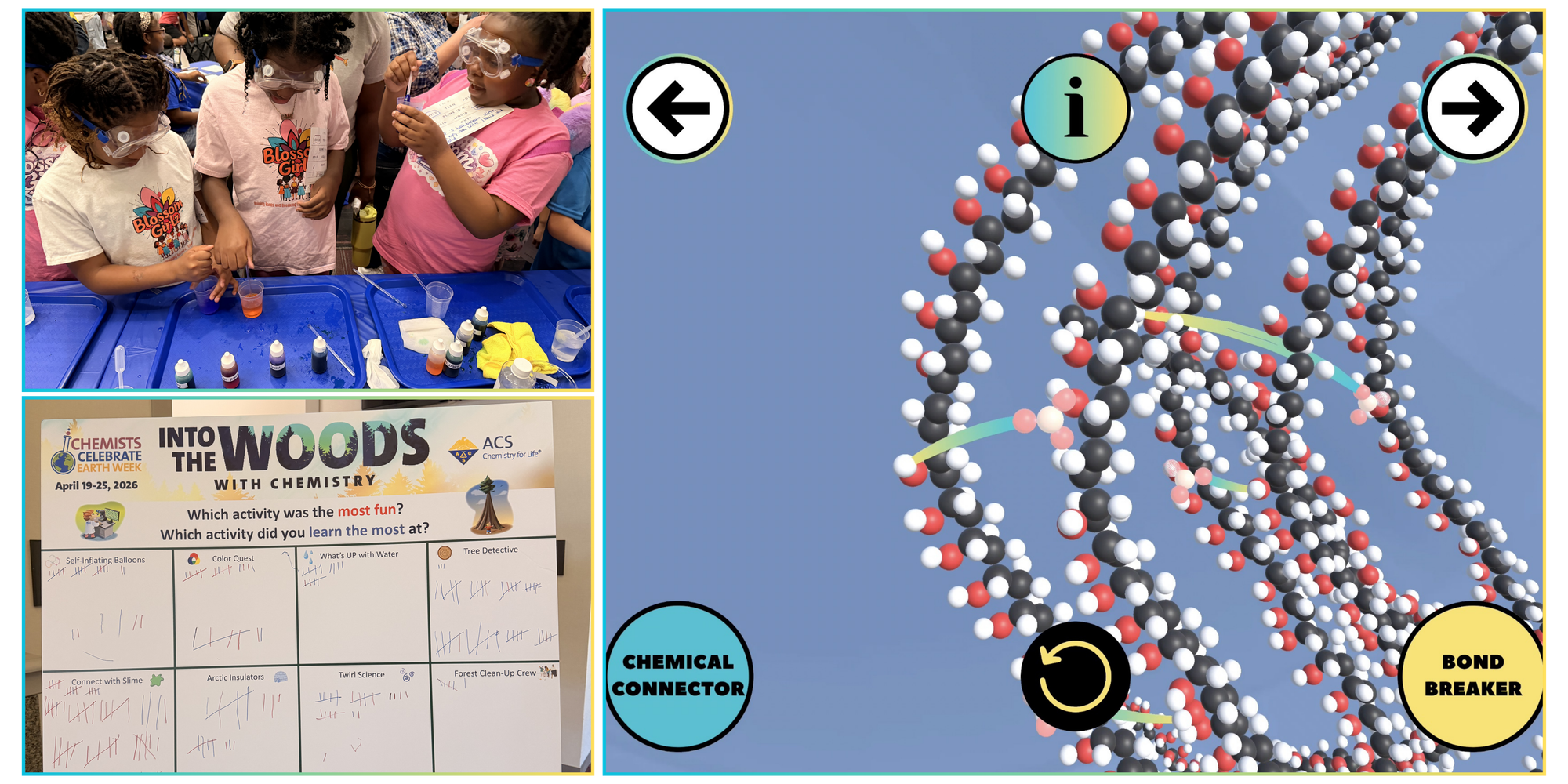
The Impact: Voted the #1 "Most Fun" activity on the Kids Zone dashboard, capturing 2.5 minutes of focused digital engagement per user. More importantly, pre-post evaluation data showed a 5X increase (from 6 to 30 respondents) in participants using mechanistic chemistry language to explain how slime works, successfully transitioning them from sensory observers to scientific thinkers.
Background: Why slime?
Slime is (arguably) the world’s most popular chemistry demo, but most kids leave the table thinking it’s just magic goo...
What exactly makes slime stretchy?
Slime is a material system. Its stretchiness arises from the formation of a polymer network. If you're interested in the mechanics, here is the chemistry of slime:
- The Base: Polyvinyl alcohol (PVA) is a long-chain polymer. In a bottle of school glue, these chains slide past each other easily, which is why glue is a liquid.
- The Connector: When you add a borax solution (sodium tetraborate), it dissolves to create borate ions. A single borate ion can form hydrogen bonds with the hydroxyl groups on two different PVA strands simultaneously.
- Cross-Linking: This links the independent strands together into a three-dimensional network. Instead of sliding past each other, the strands are now tethered. This transforms the liquid glue into a non-Newtonian fluid (slime) that retains its shape yet still flows slowly.
- The Bond Breaker: Acetic acid is a weak acid that provides hydrogen ions to the mixture. The borate ions form more stable bonds with these structures than they do when hanging onto the PVA strands. The acid reacts with the borate ions to form boric acid, which does not cross-link PVA nearly as effectively.
- The Reversal: As the borate ions are neutralized, the PVA strands are released from their network and revert to independent chains, restoring the slime to a liquid state.
In this project, we made slime more than a demonstration; into a genuine exploration of the materials science behind it.
But why a game?
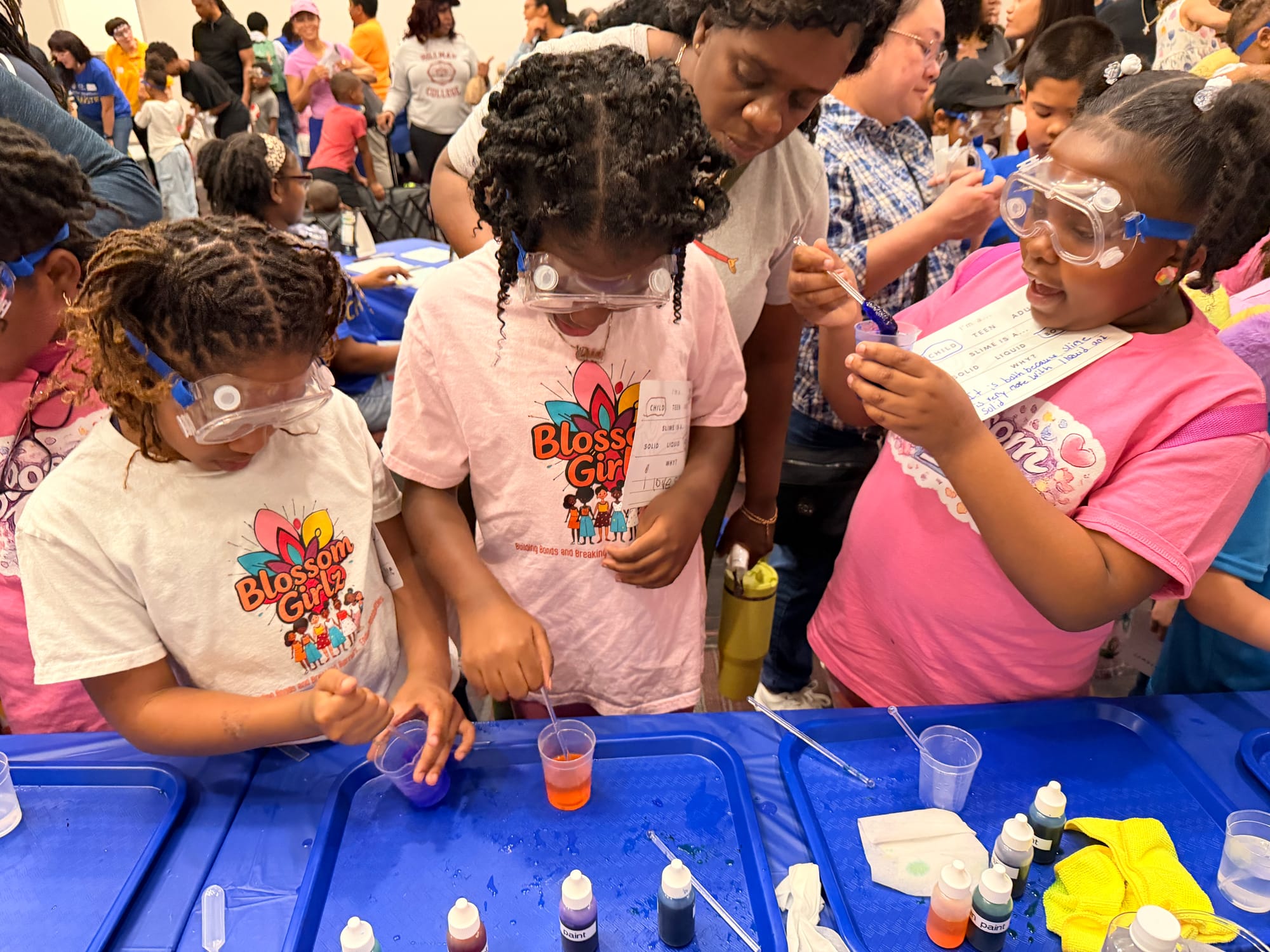
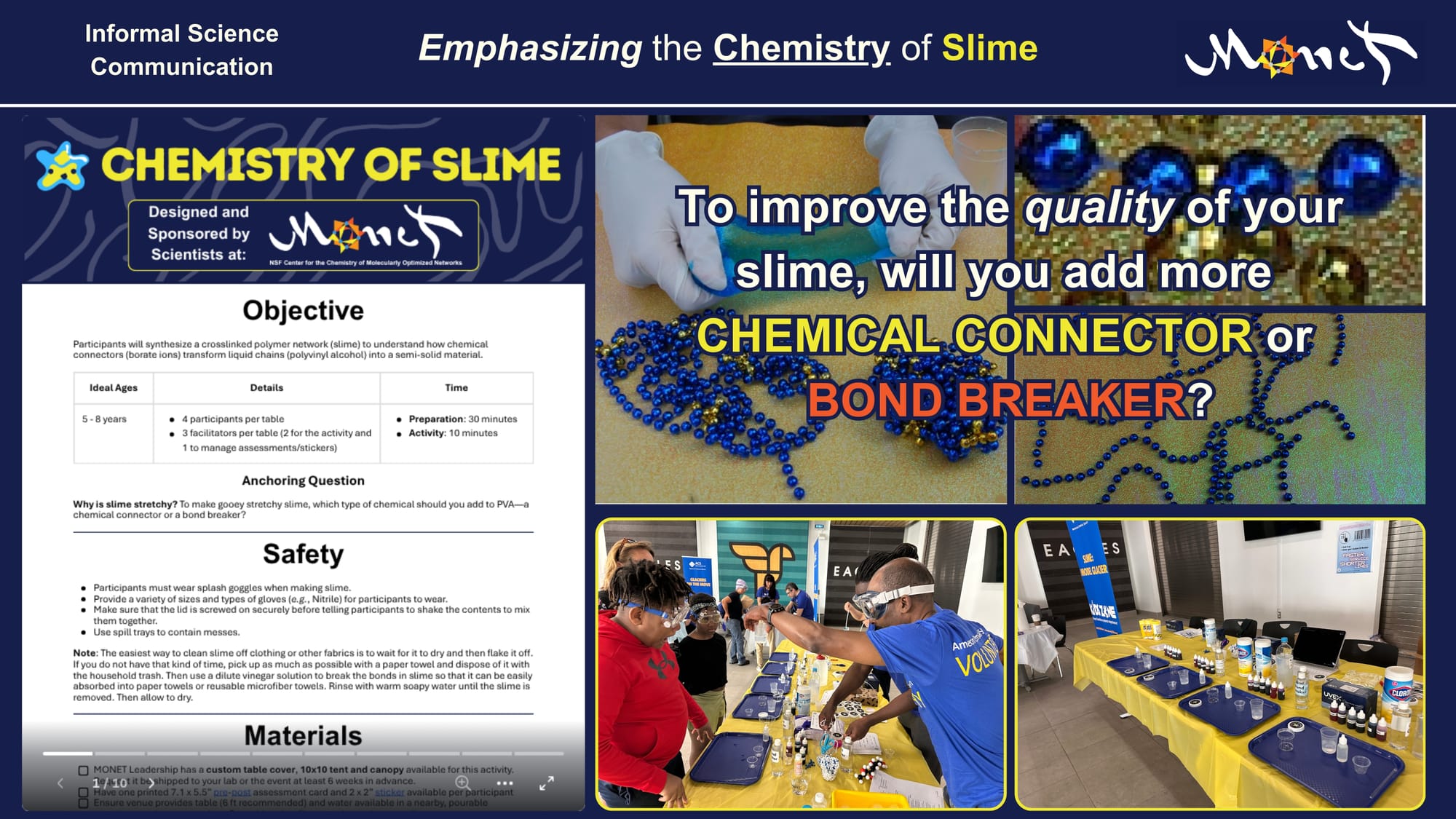
We’ve already tested and provided other tangible experiences for our learners: making the slime by experimenting with different ratios and chemical connectors and bond breakers, and exploring the chemistry through beads and molecular models:
We even created a 3D molecular animation of the chemistry of slime:
But a game rewards curiosity by making the anchoring question answerable through play-based hypothesis testing: try, observe, change one variable, try again.
“Slime is already fun. The game makes it explainable.” - Vanessa Rosa, Ph.D.
Building the Game
The Plan
The goal was to build a 3D slime chemistry game that lets players experience the answer to our anchoring question: “What makes slime stretchy?”
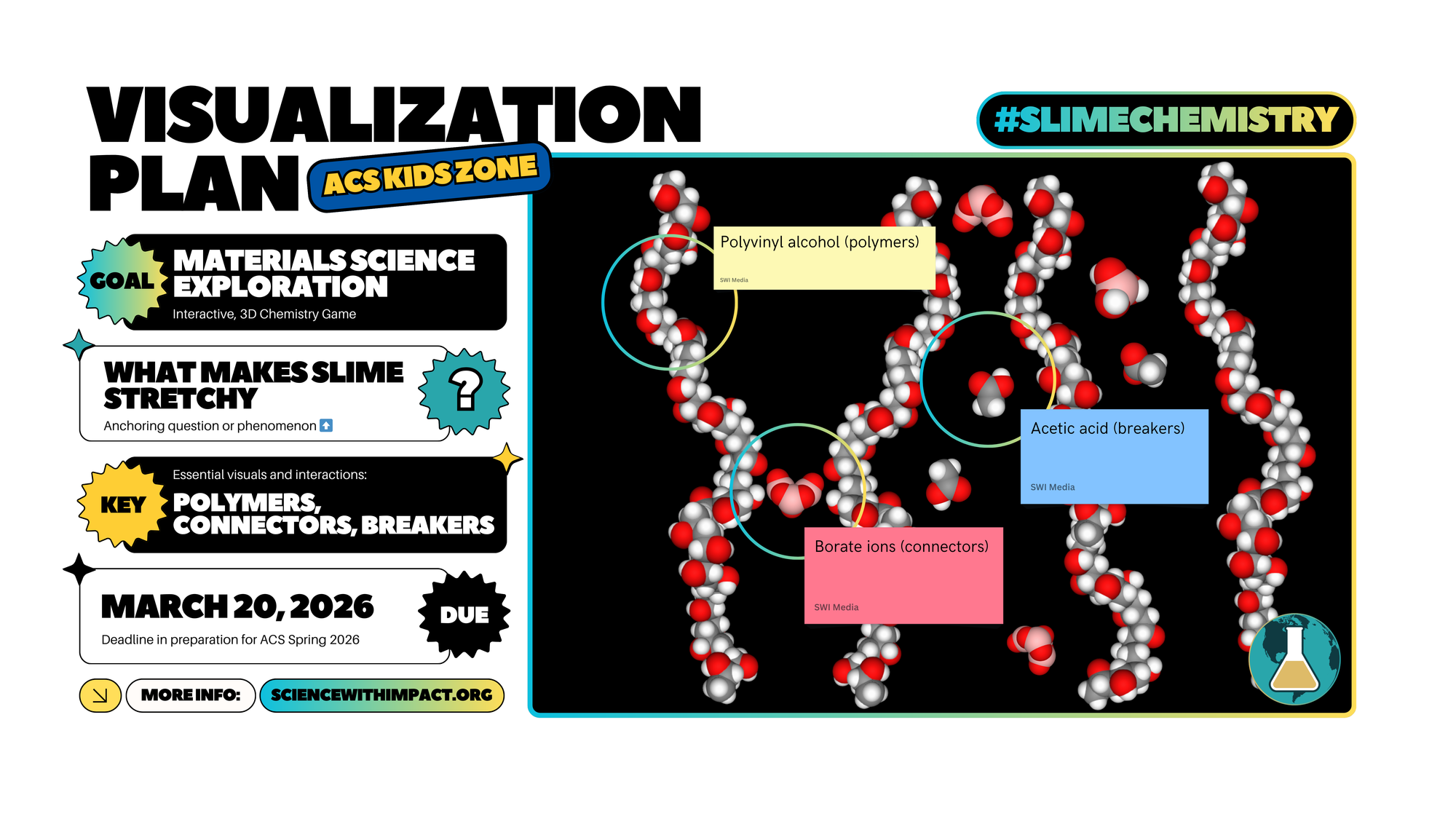
- Connectors represent the chemistry that increases cross-linking, making the material more elastic and more cohesive.
- Bond breakers cross-linking, so the material flows more like a liquid again.
That turns slime from a demonstration into a real exploration of material behavior.
The Game
Jump into the "Beyond the Goo" sandbox to experiment with polymer cross-linking in real-time (best if played on a phone 😊).
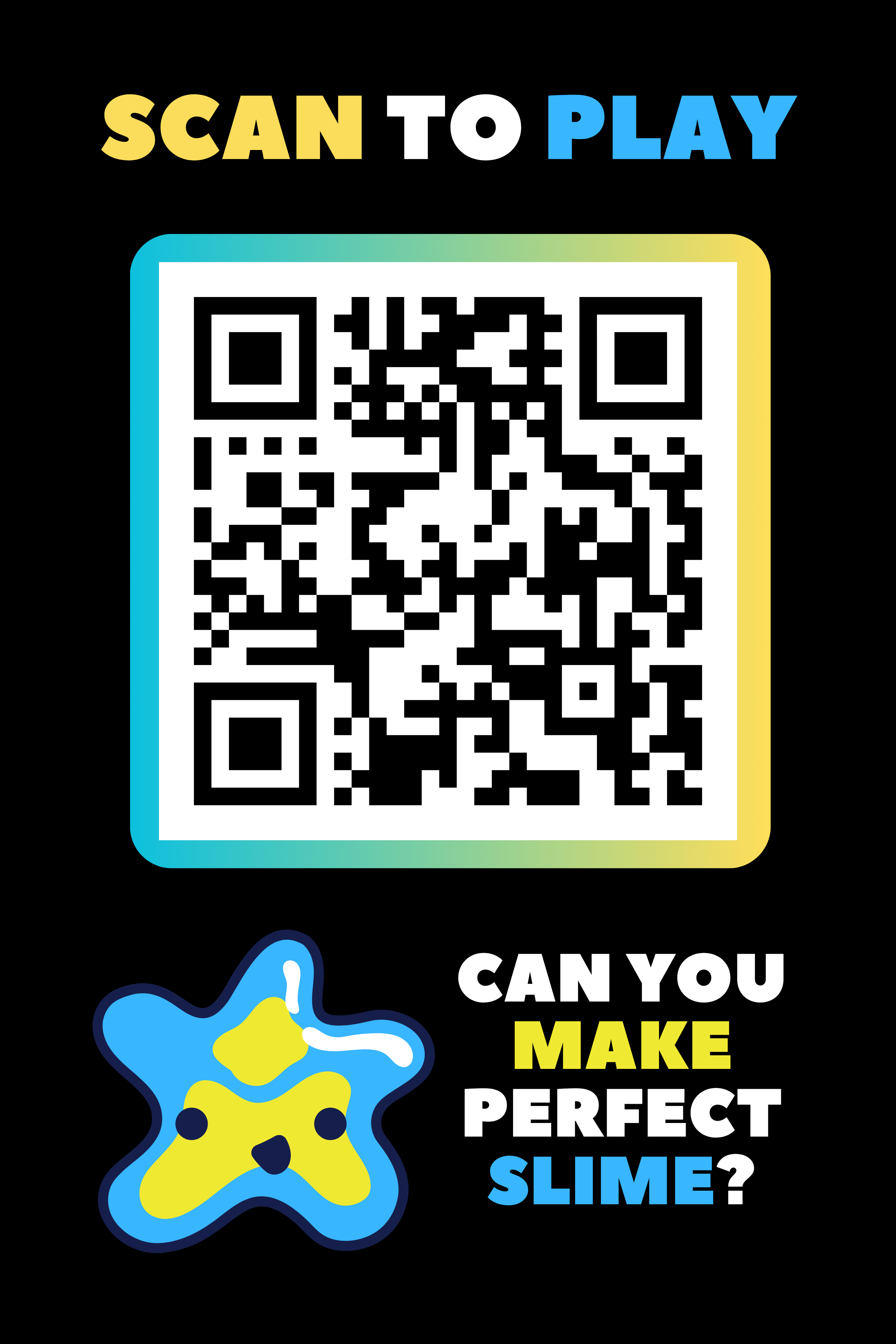
Not much of a gamer? That's okay, here's a video of the gameplay:
The Results
By pairing tangible play with our interactive 3D simulation, we didn't just entertain—we generated measurable educational data. Here is the impact breakdown from the ACS Kids Zone:
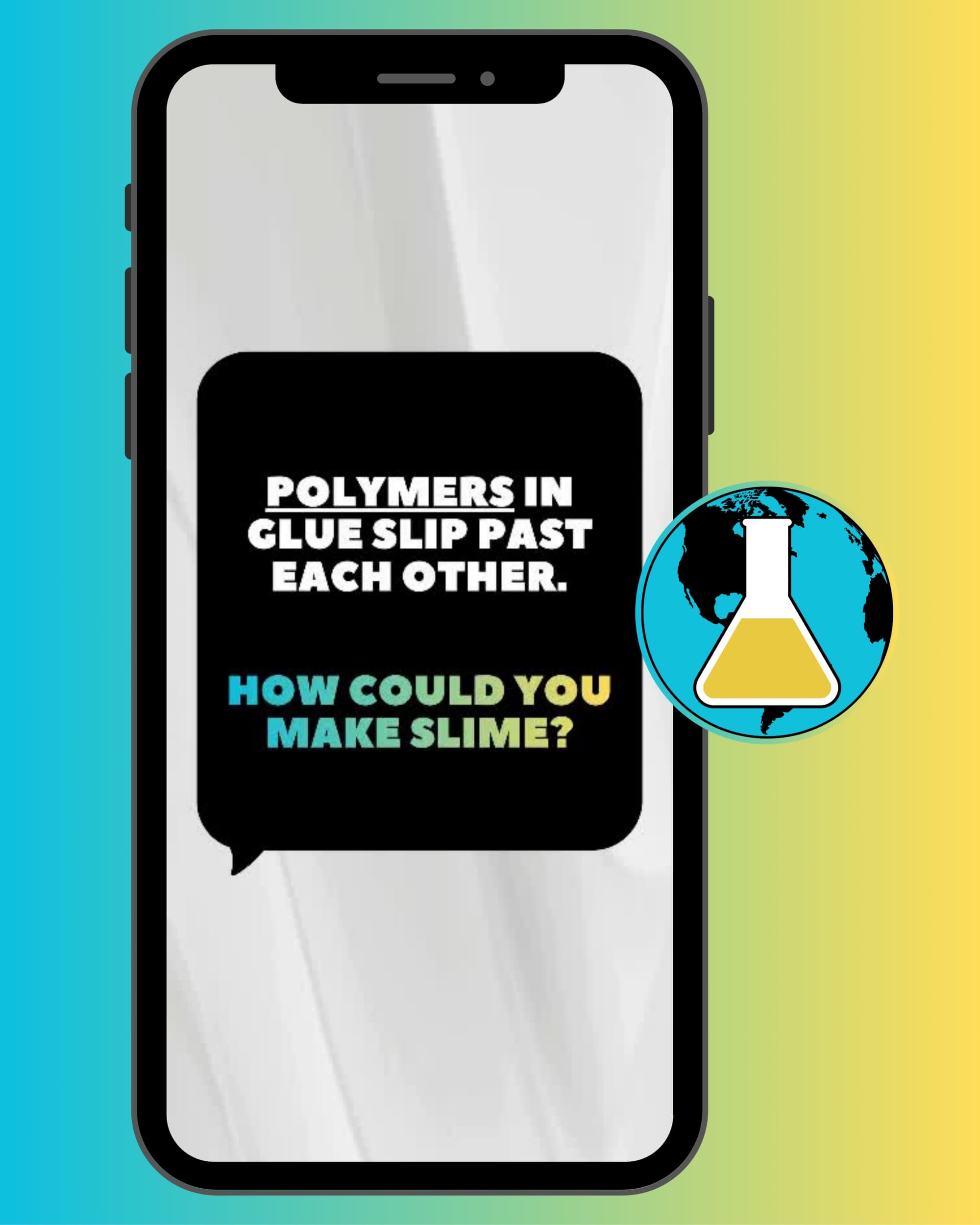
Deep Digital Engagement
167 total visitors (87 unique players) engaged with the digital station.
2 minutes and 33 seconds average visit duration—massive for a chaotic, high-energy science festival.
5 highly dedicated learners stayed until they beat the entire simulation by successfully making 5 cross-link connections!
A 5x Increase in Chemistry Comprehension
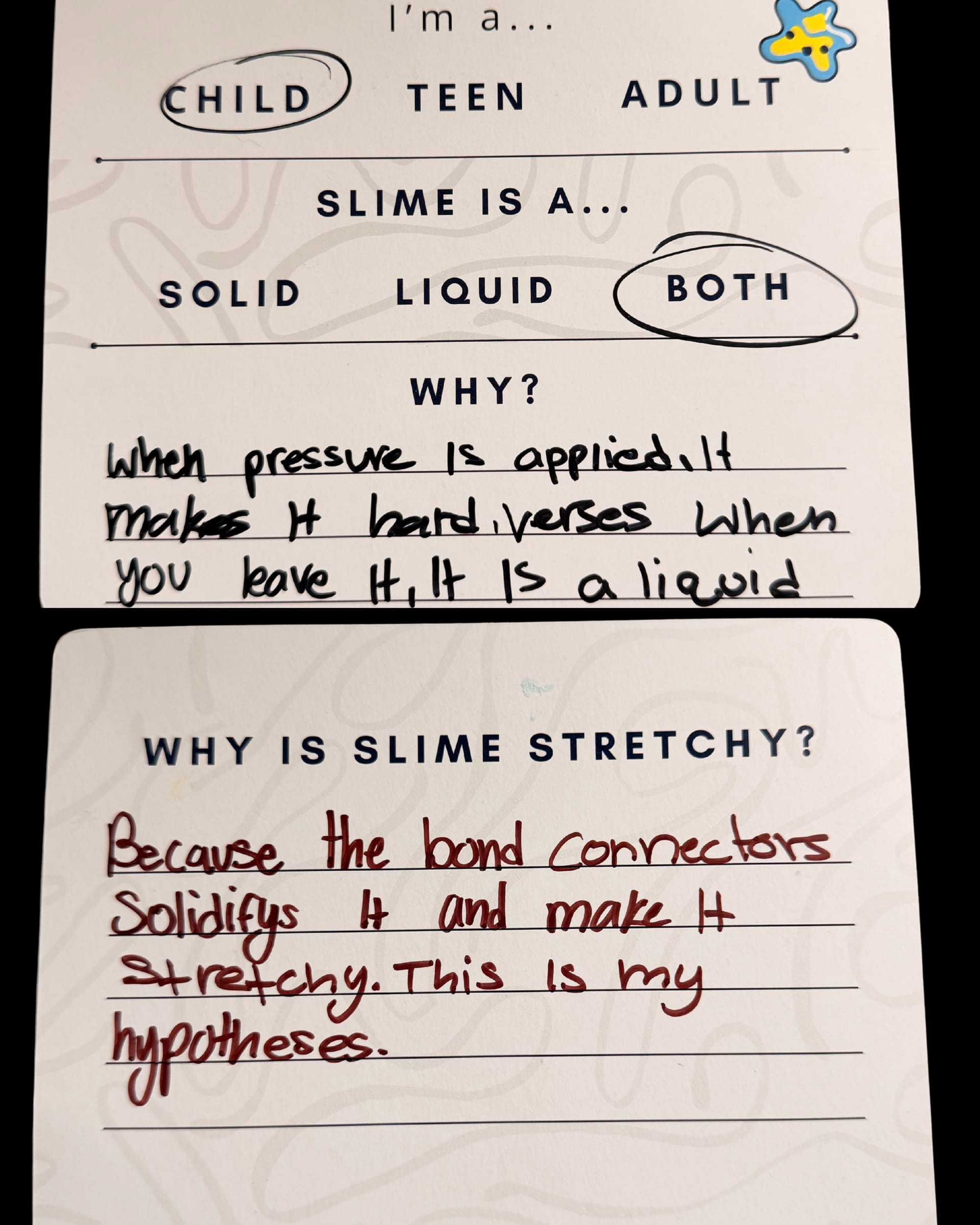
We collected 70 pre- and post-activity index cards to track the shift in scientific vocabulary (65 of which were from children):
Before the activity: Explanations were overwhelmingly sensory/observational (51 out of 70). Only 6 used chemistry-based terms.
After the activity: 30 out of 70 responses successfully used mechanistic chemistry language to explain the slime's behavior—a 400% increase! We successfully transitioned dozens of children from describing slime as "squishy" to understanding the concept of "cross-linking."
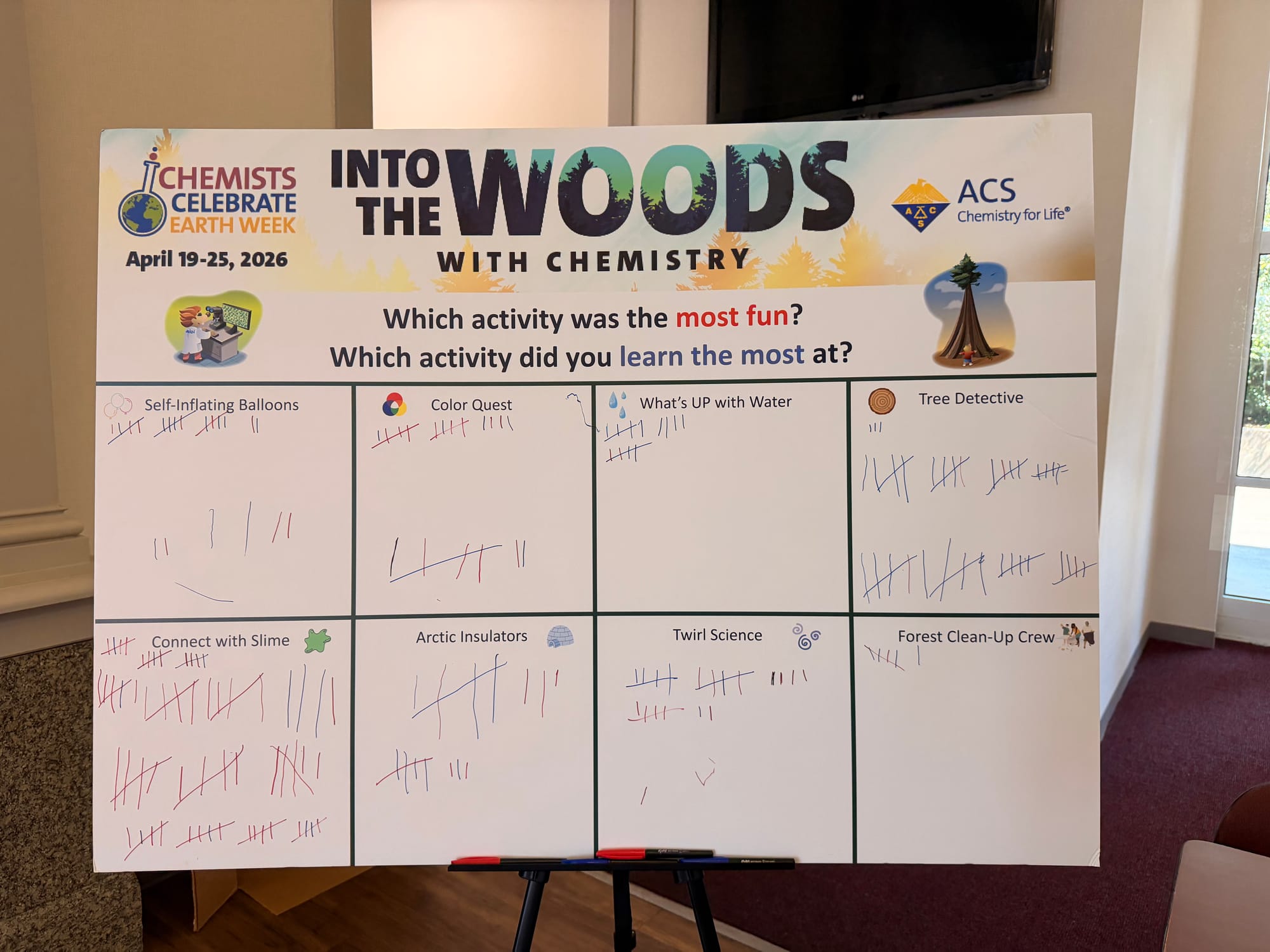
"Kid's Choice" Award!
Rigorous science doesn't have to be boring. Out of all the amazing, hands-on activities at the festival, our interactive slime station won the "Most Fun" tally board vote from the kids themselves!
P.S. If you are a PI, Educator, or Science Communicator interested in developing a 3D interactive visualization for your class, paper, or outreach, I take on one client per month and have openings later this year:
 Vanessa Rosa, Ph.D.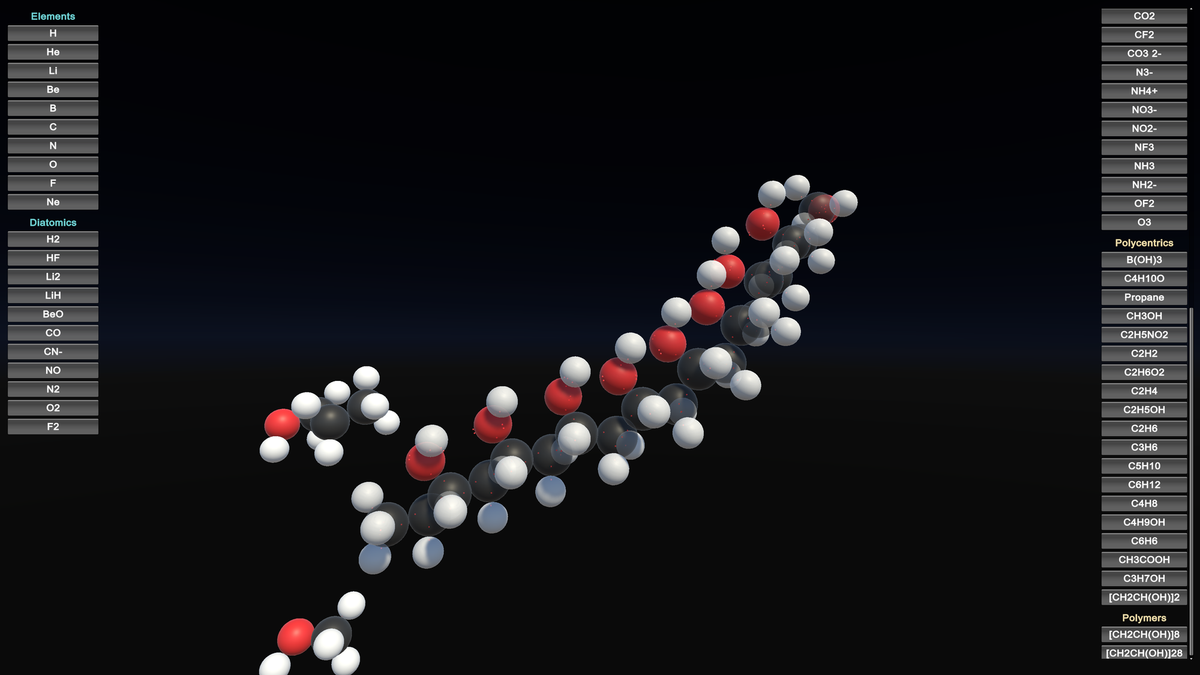
Complete the request form, and I'll send you a custom breakdown of exactly how we can build it within your budget.
The Takeaway: Delivering True Broader Impacts
When we bridge the gap between hands-on play and interactive digital simulation, we do more than just capture attention—we spark genuine scientific discovery. By empowering students to manipulate the hidden forces of polymer chemistry, we proved that rigorous science can be both the most popular activity in the room and a powerful, measurable educational tool.
This is how we transform passive observers into active scientists and deliver Broader Impacts that truly matter.


Member discussion