Why does rigorously designed research—grounded in theory, supported by data, and published in respected journals—so often fail to change practice?
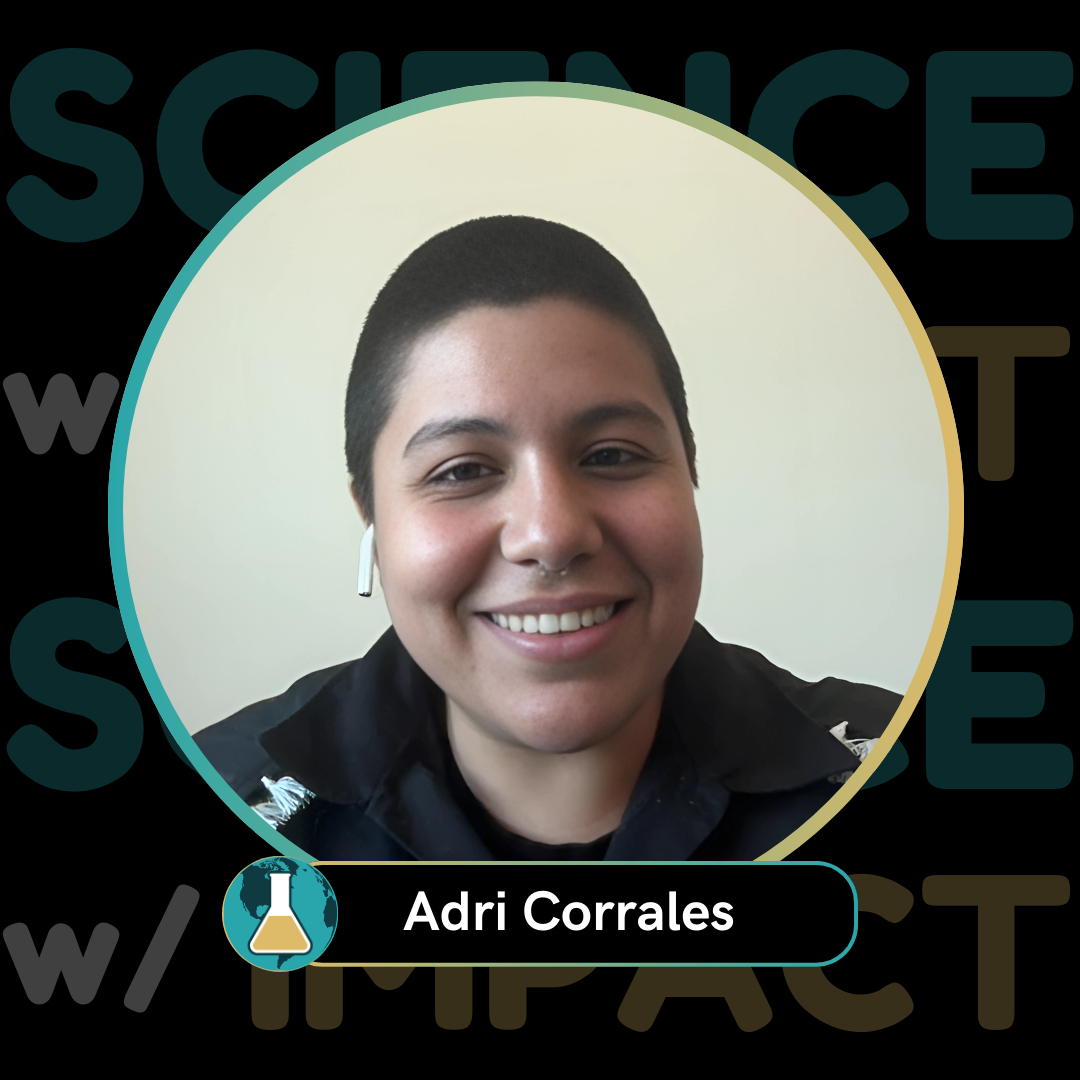
Today on Science with Impact, we sit down with Dr. Adri Corrales, a former academic turned museum professional, who shares their journey from the pressures of academia to a values-driven role as a Public Programs and Exhibit Developer at the Oregon Museum of Science and Industry.
If you've ever felt that your research skills belong beyond traditional academic roles, this episode offers a roadmap. Dr. Adri Corrales shares their journey from chemistry research to museum education, demonstrating how scientists can create meaningful impact outside the tenure track while staying true to their values.
Whether you're questioning your career trajectory, seeking alignment between your work and your values, or exploring how to leverage your research expertise in new contexts, this conversation provides practical insights and validation that your skills translate beyond the lab.
The Hidden Cost of Academic Framing
Early in the conversation, Dr. Corrales and Dr. Rosa examine a challenge many equity researchers face: the pressure to frame research in ways that dilute its message. When reviewers ask you to walk back language about racial marginalization or remove critical frameworks in the name of objectivity, you're encountering more than editorial feedback. You're navigating a power dynamic that privileges normalized perspectives.
Dr. Corrales notes that when writing from empathy about human experiences, the work often isn't received well. Editors request changes that shift the tone toward what's deemed "effective" by those already empowered in the system. This creates a dilemma: do you frame your work to pass peer review, or do you hold firm to values that may limit traditional measures of success?
The conversation reveals that "effective framing" often means catering to capitalist justifications rather than centering what's right. Instead of advocating for equity because students deserve better, researchers are pushed to emphasize workforce development and innovation metrics. This tension between authenticity and acceptance runs through the entire research publication process.
Redefining Success Beyond Citations
Dr. Corrales challenges conventional academic metrics by asking what success actually looks like. While the standard answer focuses on citation counts and engagement metrics from the research community, they propose a different measure: practical impact on educators. Success isn't another paper cited by researchers; it's an educator reading your work and saying it helped them improve their classroom practice.
This reframing exposes a fundamental misalignment in science education research. Researchers write papers to serve practitioners, but the medium—academic journals behind paywalls, dense with statistics and jargon—limits exactly the impact they seek. The primary audience isn't reading the work, and the system rewards metrics that don't reflect meaningful change in classrooms.
Dr. Rosa adds that our field established itself by working hard to be recognized as legitimate science. That effort pushed science education research so far toward traditional academic norms that we've moved away from the educators we actually want to serve. The framing no longer matches the audience.
Evaluating Your Own Framing Approach
Consider your most recent research article or presentation. Who was your intended audience? Did your framing actually reach them, or did it serve gatekeepers instead? If an educator or practitioner in your field read your work, could they extract practical value without decoding extensive jargon?
Examine how you justify equity-focused work. Do you emphasize it's the right thing to do, or do you frame it through workforce development and innovation metrics? Both approaches may be valid strategically, but which aligns with your actual values? Where have you compromised those values, and was that compromise necessary?
Think about a time reviewer feedback asked you to soften your language or remove critical framing. What was really being requested? Were you being asked to be more objective, or to be less direct about power dynamics? How did you respond, and what would you do differently now?
Look at your publishing strategy. Are you creating only traditional academic articles, or are you also translating your work into formats that reach practitioners? If you're not translating, what's preventing you? Time, resources, institutional expectations, or something else?
A Roadmap for Understanding Framing as a Structural Constraint
Rather than treating framing as a set of communication best practices, this episode offers a conceptual roadmap for how framing operates within academic systems.
Framing Functions as a Gatekeeping Mechanism.
It shapes what kinds of questions are considered reasonable, which critiques are seen as constructive, and which findings are perceived as threatening. Requests to reframe are often less about improving rigor and more about preserving institutional comfort.
Framing Mediates Audience Alignment.
Most academic research is written for reviewers and citation metrics, even when the stated goal is to influence educators or institutions. This misalignment explains why impactful findings often fail to translate into practice. The framing is optimized for legitimacy within academia, not usability beyond it.
Framing Intersects With Theoretical Grounding
While frameworks define constructs and guide analysis, framing determines how those constructs are interpreted by readers. Removing explicit equity frameworks in the name of objectivity does not eliminate subjectivity—it simply hides it behind dominant assumptions.
Framing Shapes The Cost Of Participation
Researchers who challenge prevailing narratives face additional emotional and professional labor. They must anticipate resistance, justify their tone, and negotiate legitimacy in ways their peers may never encounter.
Understanding these dynamics allows researchers to approach framing strategically rather than defensively.
Three Key Insights for Research Communicators
Frame for Your Audience, Not Your Reviewers
When Dr. Rosa presented early stoichiometry research at their first conference, they framed it as objectively as possible, defining students by assessment scores rather than social identities. While this approach worked for that 2018 audience, they now recognize it missed an opportunity to center empathy and name systemic inequities directly.
The exchange during that presentation—where a professor challenged Dr. Rosa's work by questioning when educators "lost power" to determine who succeeds—revealed how some audiences resist equity framing regardless of approach. The room's response, with dozens of hands shooting up to support the research, showed that many were ready for more direct language about power and access.
Dr. Corrales suggests that for researchers doing curriculum development work, the framing should call educators in rather than call them out. Provide accessible example questions and acknowledge limited prep time. For researchers writing grants, frame the work to show evidence that change is needed and that you have a research-informed approach to creating it.
Academic Writing Norms Limit Practitioner Impact
The conversation reveals stark differences between academic writing conventions and what actually reaches educators. Through a playful "We're academics" exchange, Dr. Rosa and Dr. Corrales highlight contradictions: expecting 12-hour reading commitments, burying practical information in supplementals, requiring abstracts that don't reveal content, overusing jargon and acronyms, and presenting 40-page manuscripts as "concise."
Meanwhile, social media and public communication prioritize visual content, brevity, practical value, and immediate usefulness. Science educators need quick takeaways they can implement, not lengthy literature reviews. Yet academic success is measured by other researchers citing your work, not by practitioners using it to improve their teaching.
Dr. Corrales notes that even when researchers add practical elements like example questions in appendices, the overall structure still tries to serve multiple audiences at once and ends up serving none effectively. The message gets muddled between researchers who might cite the work and educators who need to apply it.
Working Within vs. Working Against the System
Both researchers acknowledge a constant struggle: to what extent do you work within existing systems versus creating something entirely different? This question has no easy answer. You need to succeed in traditional academic terms to maintain your career and funding, but that success often requires compromises that dilute your message or shift your focus away from the communities you want to serve.
Dr. Rosa frames it as deciding how much to play into the system to change it, versus how much to play the game to end it. Publishing papers that get cited provides resources and legitimacy to do other work. But if those papers never reach practitioners or never name inequities directly, what's the actual impact on science education?
The conversation doesn't resolve this tension but names it clearly. Science education researchers face a choice with every paper, every framing decision, every response to reviewer comments. There's value in being strategic about when to conform and when to resist. The key is making that choice consciously rather than defaulting to what's always been done.
Practical Strategies You Can Apply
Create multiple formats from one research project. Write the peer-reviewed article for citations and credibility, but also create an infographic, a short video, or a one-page practitioner guide. Each format serves a different audience with different needs.
When framing equity research, consider whether empathy, interdependence, or ingenuity resonates most with your specific audience. Research suggests interdependence (showing how we're all connected) generates more support than empathy alone, though this may reflect audience self-interest more than community values.
Use your theoretical framework as a lens that extends beyond your personal perspective. Dr. Rosa notes that their value system has evolved by engaging deeply with equity frameworks in the literature, allowing them to question assumptions and see gaps they might have missed operating solely from lived experience.
Network beyond your immediate research group. Dr. Corrales emphasizes that success in their work has come from connecting with people doing different kinds of science education work, not just staying within one lab or one approach. Those connections provide perspective, resources, and resilience.
Question standard success metrics for your own work. If your goal is practitioner impact but you're measuring citation counts, you're tracking the wrong thing. Define what meaningful success looks like for each specific project, then design your communication strategy accordingly.
Questions to Keep Exploring
This conversation raises as many questions as it answers. How do we outgrow publishing systems that don't serve our audiences? Can science education research create meaningful practitioner impact while maintaining academic legitimacy? What does it mean to frame research authentically when authentic framing faces systematic barriers?
How do we balance the need for research to be cited by other researchers with the need for research to be used by practitioners? Is it possible to write one piece of work that serves both audiences, or do we need fundamentally different approaches for each?
What happens when your lived experience and empathy for students directly conflict with "effective" framing that avoids naming systemic injustice? How do you maintain integrity while navigating peer review processes that may not share your values or frameworks?
These questions don't have definitive answers yet. They require ongoing dialogue, experimentation with different communication approaches, and willingness to measure success by impact rather than just citations. If you're grappling with similar tensions in your work, you're not alone.
Conclusion and Connect with Dr. Adri Corrales
Dr. Adri Corrales brings expertise in chemistry education research, equity-focused pedagogy, and translating between research and practice. Their work demonstrates how scientists can create meaningful impact through alternative academic careers while maintaining commitment to education and social justice.
Thank you to Dr. Adri Corrales for this honest, reflective conversation about the tensions inherent in equity research and academic publishing. Your willingness to name these challenges helps other researchers navigate similar dilemmas with greater awareness and intention. You can find Dr. Corrales at Unite Oregon, where they continue bridging research and community-centered practice.
Thank you to readers who are doing the challenging work of research that serves students and educators, especially when that work faces systemic barriers. Your persistence matters.
If you're interested in discussing how Science with Impact can support your research communication or broader impacts strategy, schedule a conversation with Dr. Rosa at sciencewithimpact.org/collaborate.

Let's collaborate!
Science with Impact connects science and society by innovating research and education using interactive 3D molecular animation.
Learn More
1. Evidence-based impact measurement and communication.
2. Lasting national and local partnerships with STEM organizations.
3. Impact-centered professional development for students.


Member discussion