What happens when the career you worked years to earn no longer fits the life you want to live?
For Dr. Melissa Collini, the answer wasn’t to try harder or push through. It was to stop treating misalignment as failure—and start treating it as data.
Melissa is a postdoctoral researcher in chemistry education at Auburn University and the co-host of the Chemistry For Your Life Podcast, where she helps make chemistry accessible to broad, nontraditional audiences. Her career journey offers a clear-eyed look at why many research scientists begin to question the tenure-track path—and how applying scientific thinking to career design can open new, sustainable routes for impact.
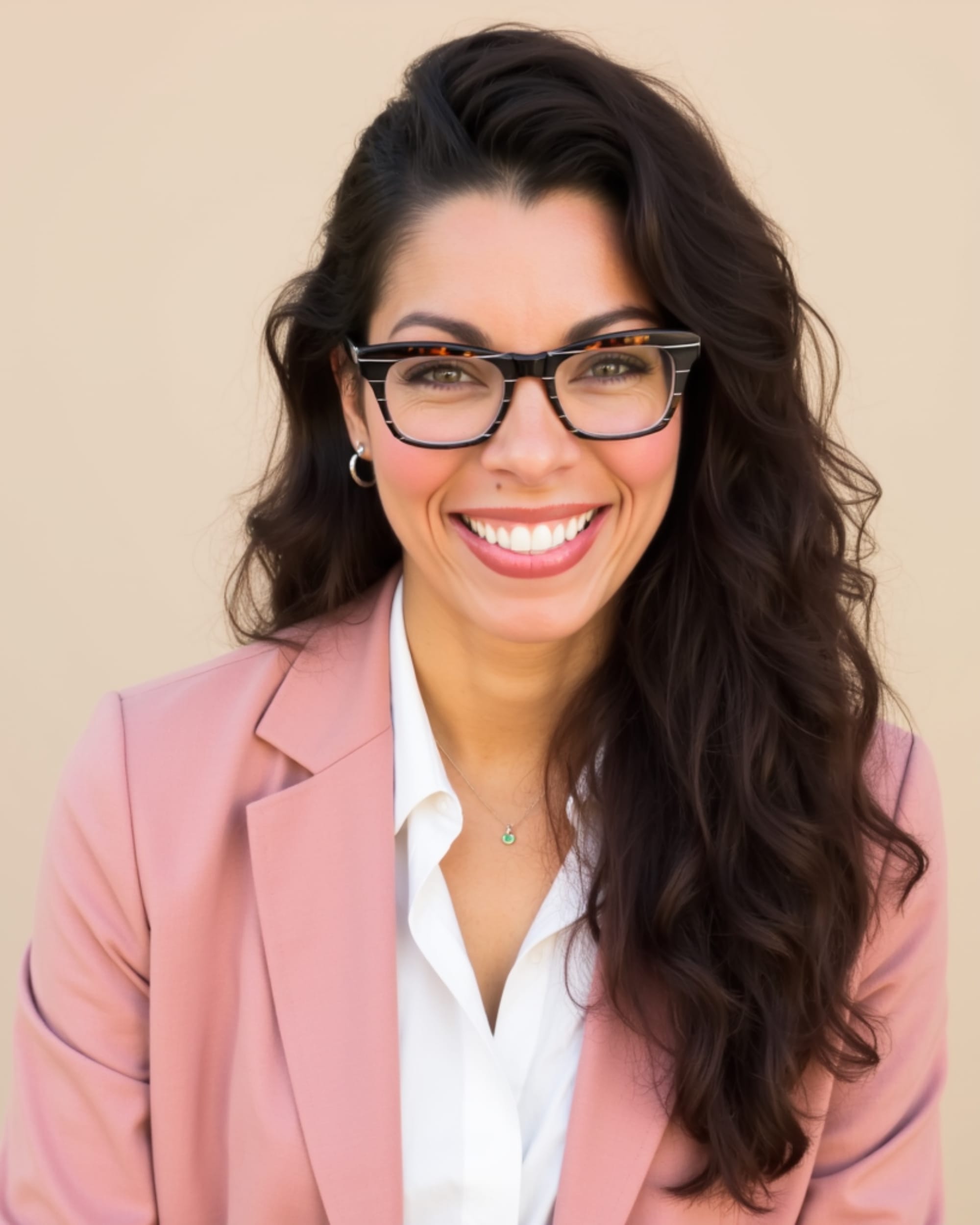
Meet Melissa Collini, Ph.D.
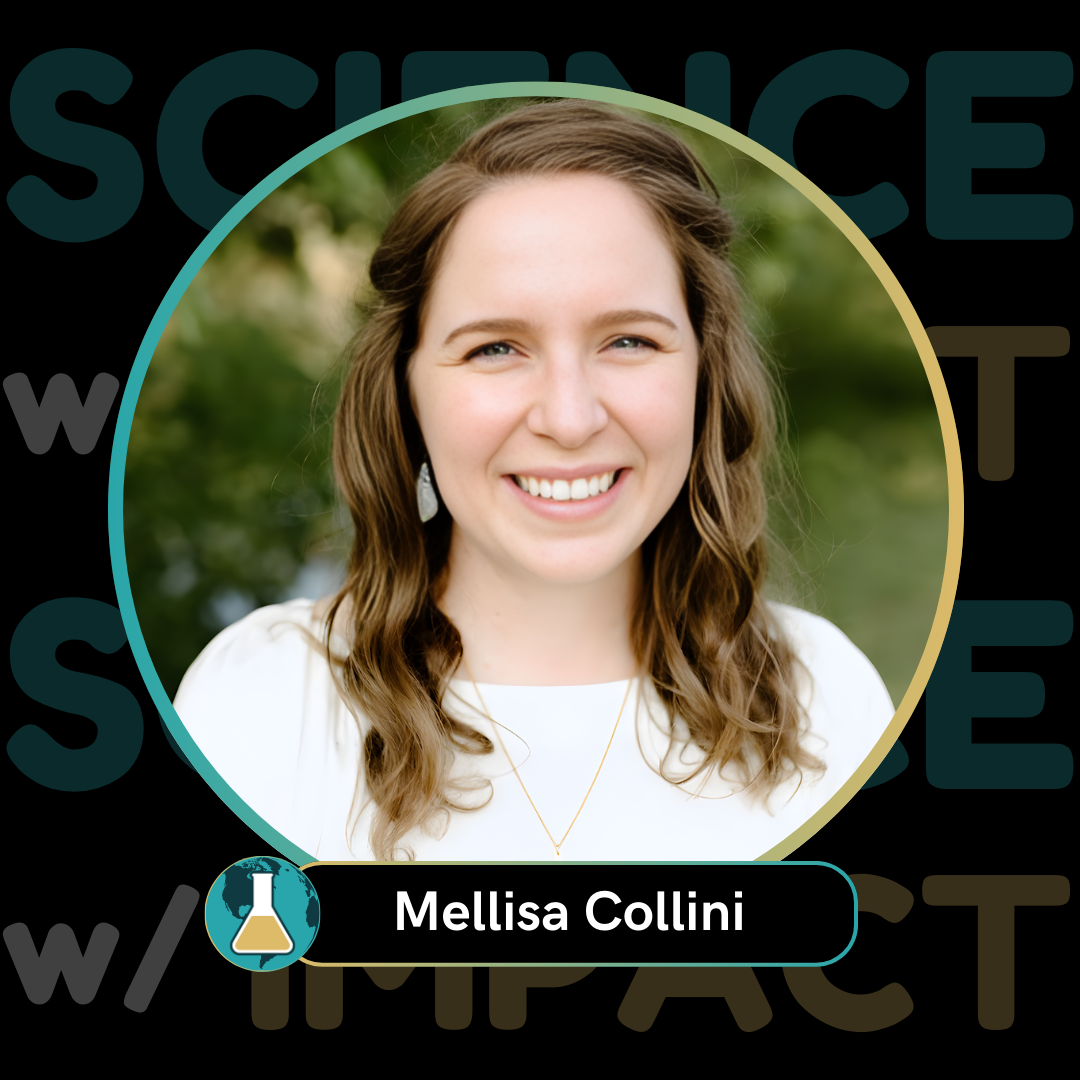
Melissa began her graduate training in organic chemistry and progressed nearly to completion. On paper, she was succeeding. In practice, the work consistently triggered anxiety, depression, and a sense of being trapped.
What ultimately changed her trajectory was not a sudden epiphany, but a pattern she could no longer ignore. Despite strong advising and clear expectations, she struggled to find intrinsic motivation for lab research. At the same time, she felt deeply energized by teaching, mentoring, and explaining chemistry in ways that resonated with learners.
A shift into chemistry education research brought both structural change and personal clarity. Under a supportive advisor, Melissa began building work around what mattered to her: teaching, accessibility, and communication. That support extended beyond formal research. When she repeatedly talked about wanting to start a chemistry podcast, her advisor encouraged her to stop waiting for permission and begin.
The result was Chemistry for Your Life, a podcast designed to make chemistry understandable, human, and freely available—an early signal of the alt-academic direction her career would take.
Interpreting the Signal: When Misalignment Becomes Data
Graduate culture often frames discomfort as a normal cost of rigor. Melissa’s experience challenges that assumption.
For years, she tried to force herself to fit a role that consistently harmed her mental health. Rather than interpreting this as a personal weakness, she eventually reframed it as evidence of structural misalignment. The problem was not her work ethic or intelligence—it was a mismatch between her values, motivation, and the environment she was in.
For research scientists, this reframing matters. Persistent anxiety, disengagement, or emotional exhaustion tied to specific roles can be signals worth analyzing, not symptoms to suppress. When distress is role-specific and sustained, it often points to a system that is incompatible with how someone works best.
Listening to those signals does not mean abandoning rigor. It means redirecting it.
Training Is Not Lost—It Is Repositioned
One of the strongest barriers keeping scientists on paths that no longer serve them is fear that leaving the tenure track invalidates their training. Melissa’s journey shows the opposite.
Her years in organic chemistry became assets, not losses. Deep disciplinary expertise strengthened her teaching, sharpened her communication, and gave credibility to her public-facing work. The experimental mindset—hypothesis testing, troubleshooting, systems thinking—translated seamlessly across roles.
For research scientists considering alternate paths, the takeaway is clear: training does not disappear when you change environments. It compounds differently. The question is not whether your skills still count, but where they create the most leverage.
Impact Scales Through Access, Not Just Output
Melissa’s most immediate and sustained impact did not come from publications alone. It came from access.
During the pandemic, she began creating short organic chemistry videos to address common student questions. What started as a practical workaround became a long-term resource. Years later, students who never enrolled in her courses still reach out to say the videos helped them succeed.
Her podcast extends that reach even further. By meeting learners outside traditional classrooms, she bypasses institutional bottlenecks and connects directly with people who were previously excluded or discouraged from chemistry.
For scientists invested in broader impacts, this highlights a crucial shift: impact is not only about producing knowledge. It is also about how widely, clearly, and equitably that knowledge is shared.
Sustainability as a Scientific Constraint
Melissa’s decision to pursue alt academia was not about avoiding hard work. It was about avoiding unbounded work.
She describes the tenure process as opaque, with moving goalposts and cultural norms that reward constant overextension. For someone with ADHD and a need for clear feedback loops, that structure posed a sustainability risk.
Rather than treating this as a personal limitation, she treated sustainability as a legitimate constraint—much like funding, time, or experimental feasibility. She sought roles with clearer expectations, defined boundaries, and the ability to disengage from work without guilt.
For research scientists planning long careers, this perspective is critical. Unsustainable systems may limit cumulative impact, even when short-term productivity looks high.
A Roadmap for Alt-Academic Decision-Making
Alt academia is not a single destination. It is a spectrum of roles with distinct trade-offs. Melissa’s experience offers a practical framework for navigating that landscape.
Research-Adjacent Roles Within Academia
Examples include teaching centers, education research, program evaluation, and faculty development.
- What they offer: Continued engagement with universities, alignment with teaching and mentoring values, and more stable structures than tenure-track roles.
- Trade-offs: Less autonomy than independent work and continued exposure to institutional constraints.
- Best for scientists who: Want to stay embedded in academic spaces while shifting away from publish-or-perish incentives.
Science Communication and Content Creation
Includes podcasts, public writing, curriculum development, and open educational resources.
- What they offer: Immediate visibility of impact, control over audience and messaging, and the ability to scale reach beyond formal classrooms.
- Trade-offs: Less defined career ladders and a need for self-direction and experimentation.
Melissa’s work shows how this path allows scientists to create change directly rather than waiting for institutional reform.
Hybrid or “Patchwork” Careers
These combine multiple roles, such as part-time teaching, consulting, content creation, or research support.
- What they offer: Flexibility, diversified income streams, and alignment with changing life stages.
- Trade-offs: Greater responsibility for boundary-setting and long-term planning.
- Best for scientists who: Value autonomy and are comfortable designing their own structure.
Industry or Independent Roles
Includes workforce development, training programs, consulting, and science-adjacent organizations.
- What they offer: Clear deliverables, defined accountability, and stronger separation between work and personal time.
- Trade-offs: Less freedom in topic selection and different success metrics.
Melissa’s guiding question applies here: does this role support the life you want, or compete with it?
Evaluating Fit: Better Questions to Ask
Rather than asking whether a role is prestigious, Melissa’s journey suggests more diagnostic questions:
- Are expectations and success metrics clear or constantly shifting?
- Does the role rely on chronic overwork?
- Can you identify who benefits from your work—and how?
- Does this path support your values, relationships, and health?
When a role requires sacrificing personhood now for fulfillment later, the cost may outweigh the promise.
Key Takeaways - Navigating Alternative Academic Careers
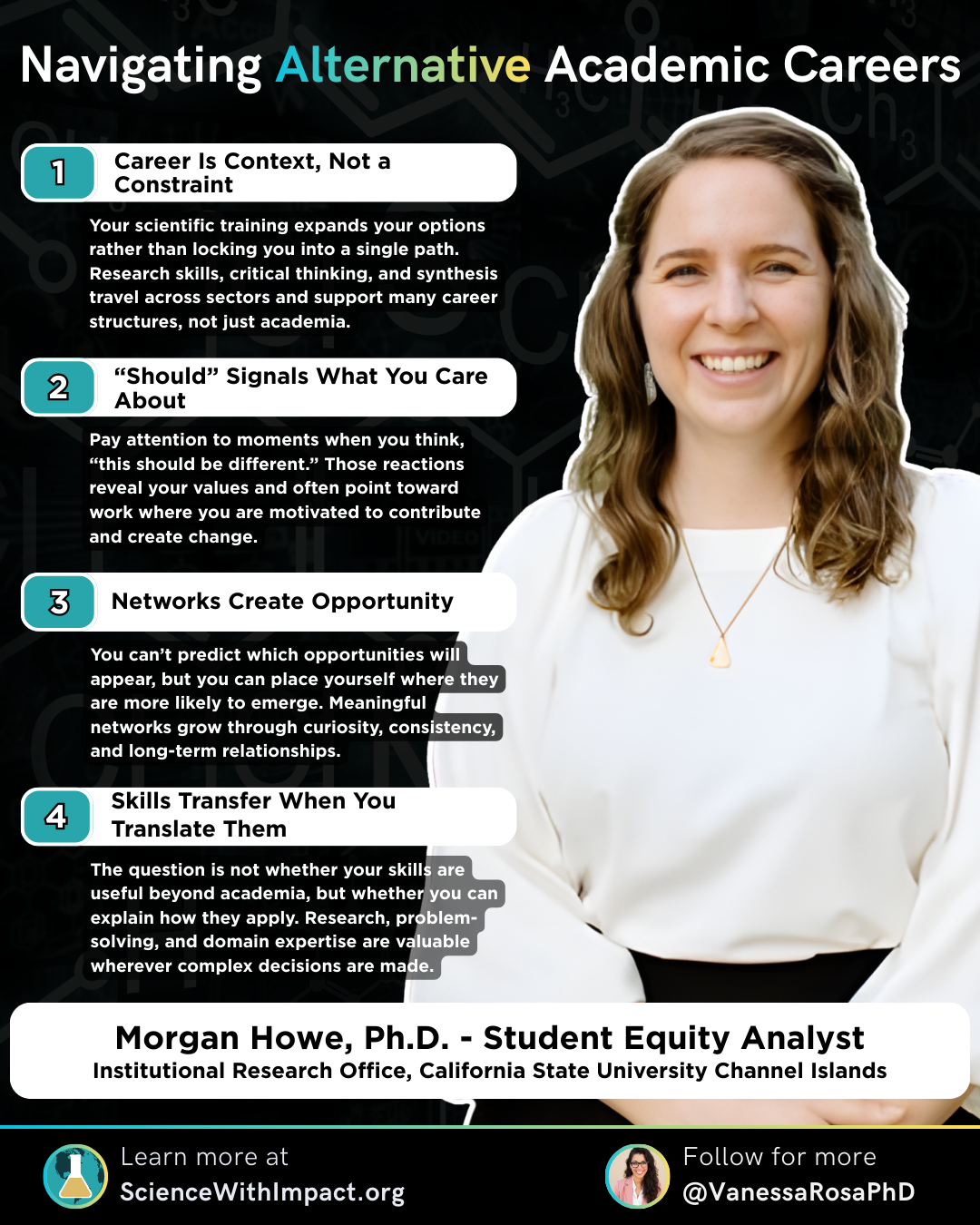
1. Mental Health Is Actionable Data, Not Background Noise
Persistent anxiety, dread, or disengagement are not personal failures—they are signals of structural or role misalignment. Melissa’s experience shows that ignoring these signals in the name of sunk costs prolongs harm, while listening to them can clarify where your skills and values are better used. For research scientists, this reframes mental health from something to “manage around work” into information that should actively inform career decisions.
2. Research Training Transfers—Even When the Role Changes
Leaving a traditional research trajectory does not erase the value of your training. Melissa’s years in organic chemistry directly informed her effectiveness as a chemistry educator and science communicator. Skills like experimental reasoning, problem decomposition, and disciplinary fluency remain assets across teaching, communication, and alternative research-adjacent roles. The question is not whether your training still counts, but where it creates the most leverage.
3. Impact Is About Access, Not Just Output
Melissa found greater scientific impact through content creation and teaching than through conventional research metrics. By making chemistry accessible to learners outside formal classrooms, she reached audiences that research publications rarely do. For scientists concerned with broader impacts, this highlights a key shift: impact scales through accessibility and distribution, not solely through papers, grants, or institutional reach.
4. Career Decisions Should Optimize for Sustainability, Not Prestige
Tenure-track pathways often rely on opaque, moving benchmarks that reward overwork and delayed gratification. Melissa’s decision to pursue alt-academia reflects a strategic choice: prioritize roles that offer clear expectations, sustainable workloads, and room for personal life. For research scientists, this underscores an important principle—long-term impact requires careers that are psychologically and structurally sustainable, not just prestigious.
Conclusion: Building Your Path Forward
The move toward alt academia isn’t about rejecting research—it’s about applying the same scientific rigor to your career decisions. Melissa Collini, Ph.D. shows that the skills developed in graduate training—pattern recognition, troubleshooting, experimental thinking, and persistence—translate directly. What changes is where they are applied.
Melissa’s journey makes one thing clear: there is no single “right” path for research scientists. Some thrive in the open-ended autonomy of the tenure track. Others do better in roles with clearer expectations, faster feedback loops, or broader reach. Success comes from understanding what energizes you, noticing what consistently drains you, and asking better questions about the structures you’re stepping into—not just the titles you’re stepping toward.
Most importantly, exploring alt-academic options doesn’t mean your training was wasted or your identity as a scientist is diminished. It means you’re expanding your definition of where science belongs. The question isn’t whether you can succeed in academia. It’s whether the version of academia—or any system—you’re considering aligns with how you want to contribute to science and to your own life.
Taking Action: Your Next Steps
If you’re a graduate student, postdoc, or early-career researcher exploring alt-academic paths:
- Map your motivation patterns: Identify the work that reliably gives you energy versus the work that consistently depletes you. Treat this as data.
- Choose your lane intentionally: Decide whether you’re drawn to research-adjacent roles, communication, hybrid careers, or industry-facing work.
- Run informational interviews like experiments: Ask about daily tasks, success metrics, workload norms, and what “a good year” looks like.
- Test before you pivot: Pilot a small project—workshop, article, podcast segment, curriculum module—to gather evidence of fit.
- Protect sustainability early: If a role relies on chronic overwork, that is a structural risk, not a badge of commitment.
For mentors, faculty leaders, and program directors:
- Normalize career exploration early and often.
- Treat communication, teaching, and accessibility as legitimate forms of impact.
- Build bridges to multiple outcomes so alternate paths are visible, not hidden.
Join the Conversation
Thank you to Melissa Collini, Ph.D. for sharing such an honest and practical account of what it looks like to listen to the signal—and then design a career that supports both impact and personhood.
And thank you to the research scientists who are willing to question default pathways and build careers with intention. If you’re working to expand the societal impact of your research through communication, evaluation, workforce development, or broader impacts planning, Science with Impact can help you design a strategy that is credible, measurable, and aligned with your goals.
Let's collaborate!
Science with Impact connects science and society by innovating research and education using interactive 3D molecular animation.
Learn More
1. Evidence-based impact measurement and communication.
2. Lasting national and local partnerships with STEM organizations.
3. Impact-centered professional development for students.


Member discussion