Scientists spend years mastering their craft but far less time learning how to share that knowledge with those who need it most. In today's landscape, where trust in science faces unprecedented challenges, the ability to communicate effectively has become as essential as the research itself.
Jeff Koslofsky brings a unique perspective to this challenge. As a marketing strategist at the University of Rochester School of Medicine and Dentistry, he works directly with PhD candidates, postdocs, and faculty to translate complex research into messages that resonate beyond academic circles.
His insights reveal a crucial truth: building your professional reputation online isn't about becoming a full-time content creator—it's about showing your work in ways that create opportunities, foster collaborations, and amplify impact.
Meet Jeff Koslofsky
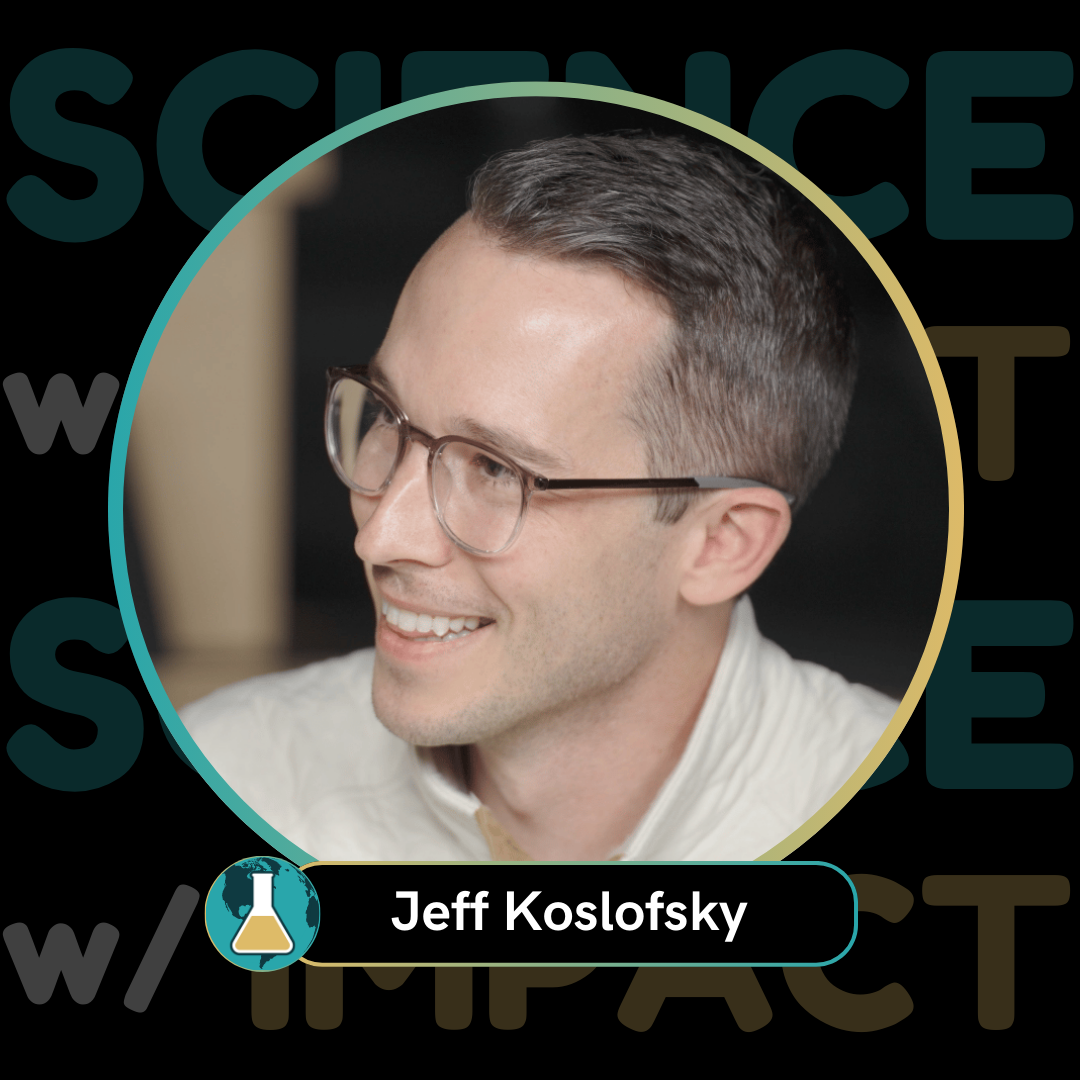
Jeff Koslofsky is a marketing strategist at the University of Rochester School of Medicine and Dentistry. He works directly with PhD candidates, postdocs, and faculty to translate complex research into messages that resonate beyond academic circles. His role sits at a critical intersection: helping scientists build digital reputations that open doors to collaborations, speaking opportunities, and career advancement.
What makes Jeff's perspective particularly valuable is his background outside traditional science. With roots in journalism and broadcasting, he brings a storyteller's sensibility to science communication. "I worked for Johns Hopkins a few years back in their alumni office," he explains. "So there were some scientists I interacted with there, researchers, but otherwise that was really it. But when I first started at University of Rochester and really started to learn about, just get to know the people behind the research, you get to see just how important the basic research that they're doing is."
This outsider-turned-insider position gives Jeff unique insight into the communication gap many researchers face.
The Communication Gap in Science
During our conversation, Jeff highlighted a fundamental challenge in scientific training:
"A big part of the training is you do your work, you do the research, and it gets published in a journal and that's it. And then it stops there. There's not a lot of education on how to share that further and get it in front of the people that probably need to hear it."
This gap has real consequences. Research that could inform policy decisions, inspire the next generation of scientists, or address public health challenges often remains locked behind paywalls and technical jargon. Meanwhile, misinformation fills the void, eroding public trust in science precisely when we need it most.
The solution isn't to turn every scientist into a social media influencer. Instead, it's about integrating communication into the scientific workflow—making it as natural as reading literature or analyzing data.
Redefining Personal Brand
When Jeff talks about personal branding, he's careful to distinguish it from influencer culture: "When people hear personal brand, they usually think content creator, you think influencer. I feel like there's such a connection there between personal branding and being an influencer, but it really doesn't have to be that. Personal brand is more like your reputation."
In an era where employers routinely search for candidates online and collaborators discover each other through digital platforms, your online presence serves as a living portfolio. It demonstrates not just what you've accomplished, but how you think, what you value, and how you approach problems.
Jeff identifies four distinct ways to engage online, each requiring different levels of commitment:
The key insight? You don't need to be a creator to build a meaningful online presence. Strategic commenting, thoughtful curation, and genuine engagement can establish your expertise and expand your network without the time commitment of constant content creation.
Key Takeaways
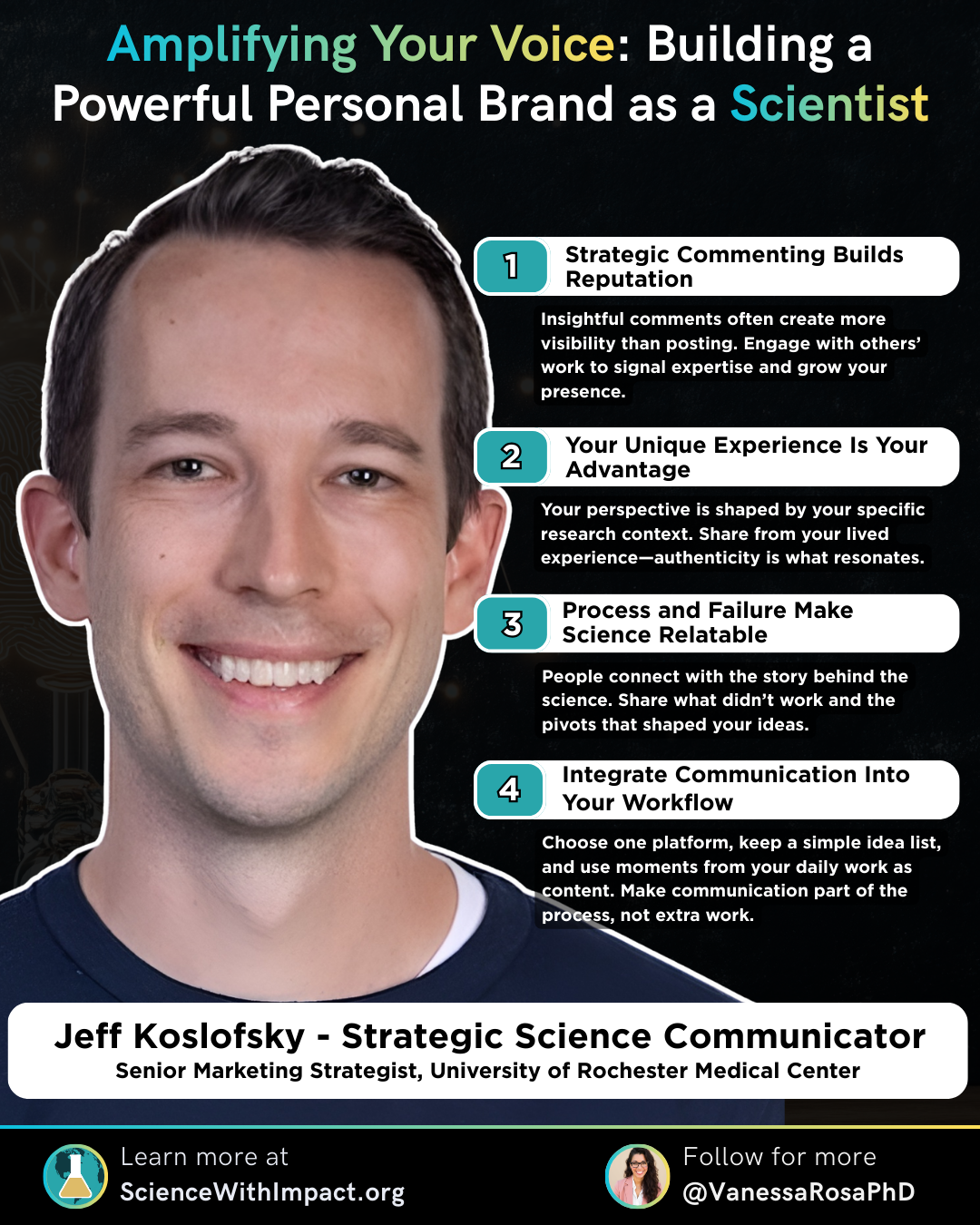
Strategic Commenting Builds Reputation
Thoughtful comments on posts within your field accomplish more than passive scrolling ever could.
Jeff emphasized this often-overlooked strategy: "One kind of underrated way to building a brand online is comments, insightful comments on people's posts that you admire. A colleague of yours or somebody in the space in your career that you kind of see for yourself commenting on their posts."
When you add value to conversations through informed comments, three things happen: the original poster sees your expertise, others in the conversation discover you, and the platform's algorithm surfaces that content to more people in your field. Your visibility grows not through shouting into the void, but through meaningful dialogue.
This approach requires minimal time investment—perhaps 10–15 minutes a few times per week—but compounds over time as your presence becomes associated with thoughtful contributions to important conversations in your field.
Your Unique Experience Is Your Competitive Advantage
Stop worrying about what's already been said and start sharing your perspective.
Many researchers hesitate to share their work, convinced someone else has already covered their topic. Jeff addresses this directly: "So many trainees I talk to kind of get caught up on the fact like, what am I gonna talk about that others haven't already? And it's like, well, you can own that. Your particular experience right now, like you are in graduate school going through X, Y, Z program in Rochester, New York. Like that's not everybody has that experience."
Your specific combination of research focus, institutional context, geographic location, cultural background, and career stage creates a perspective no one else can replicate. A postdoc studying neurodegenerative diseases at a research-intensive university brings different insights than a faculty member researching the same topic at a primarily undergraduate institution, even if their findings align.
This insight liberates researchers from the paralyzing pursuit of saying something no one has ever said before. Instead, the goal becomes sharing your authentic experience of the scientific process—including the failures, pivots, and unexpected discoveries that rarely make it into publications but often resonate most deeply with audiences.
Process and Failure Make Science Relatable
The messiness of research connects with audiences more than polished results ever could.
Jeff's advice for making research accessible centers on storytelling and vulnerability: "You can just show the human side of things by showcasing what worked and what didn't work or like, if you can tell a story around something you're working on, that storytelling just makes things so relatable."
He illustrated this with a hypothetical: imagine if Doc Brown from Back to the Future had a LinkedIn profile. Rather than simply announcing his invention of time travel, he might share: "I fell off my toilet and hit my head on the toilet seat. And then I had a revelation about the flux capacitor, and that's how I invented time travel."
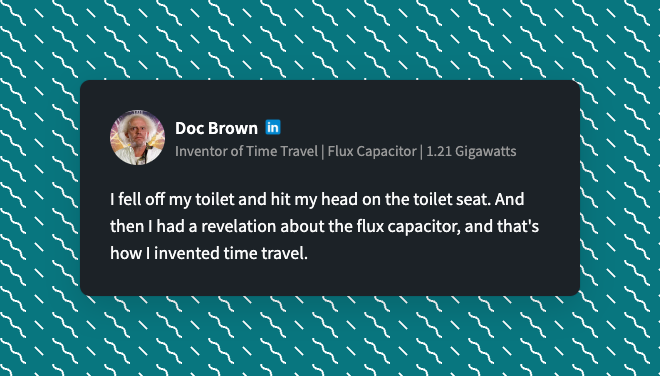
This approach accomplishes two crucial things. First, it humanizes the scientific process, showing that breakthroughs often emerge from unexpected moments rather than linear progression. Second, it acknowledges that failure and frustration are integral to research—not aberrations to be hidden, but experiences that unite the scientific community.
When researchers share their struggles alongside their successes, they combat the harmful myth that scientific progress results from individual genius rather than persistent experimentation, collaboration, and learning from what doesn't work.
Integration Over Addition
Communication should enhance your existing work, not compete with it for time and attention.
The most sustainable approach to science communication doesn't treat it as an extra task but as an integral part of the research process. Jeff shared how he approaches this: "I've tried to be better about setting some time aside to create something for myself. You also have to remember, like, there's all the social media channels, there's newsletters, there's podcasts, you could do video, you could write and then you could get overwhelmed by trying to be everywhere all the time."
His solution? Focus on one platform or medium, develop competence and consistency there, then expand if time and interest permit. This approach mirrors how researchers develop expertise in their scientific work—depth before breadth.
Jeff also emphasized keeping a running list of ideas: "Anytime I see something now, like my notes app on my phone is up and I'm like, ooh, that was a good comment from somebody on the Bobby Bone Show that I listened to. I could probably talk about that in my newsletter."
By staying alert to connections between your daily experiences and your research interests, content creation becomes less about manufacturing material and more about recognizing and sharing insights already emerging from your work and life.
The Changing Career Landscape
Jeff's perspective on why science communication matters extends beyond individual benefit to structural changes in how careers develop: "I just feel like you're just seeing less and less of that. It's not that people aren't loyal, it's just that the benefits of staying in one place for so long and doing something for one institution are getting smaller and smaller."
The traditional academic career path—secure a tenure-track position, build a research program, retire with a pension—increasingly represents the exception rather than the rule. Even established scientists face institutional restructuring, funding uncertainties, and evolving research priorities.
In this environment, your professional reputation can't be entirely tied to a single institution or position. A well-maintained online presence serves as a portable portfolio, documenting your expertise, values, and contributions in ways that transcend any single affiliation.
Jeff noted that hiring managers increasingly look at candidates' online presence:
"I've heard from faculty at the University of Rochester that if they go online and see somebody doesn't have a LinkedIn page set up or there's a picture but nothing else, and then they have another candidate that's built out a nice profile, they talk about what they do, they've shared content, they've engaged, like they're more likely to look at them."
This isn't about superficial metrics or gaming algorithms. It's about demonstrating that you can communicate your work effectively—a skill essential for securing funding, building collaborations, mentoring students, and translating research into real-world applications.
Practical Starting Points
If you're ready to strengthen your science communication but unsure where to begin, consider these concrete steps:
- Audit your current presence: Search for yourself online. What appears? Does it accurately represent your current work and expertise? If not, what needs updating?
- Choose one platform: Rather than trying to maintain a presence everywhere, select the platform where your target audience already gathers. For most researchers, LinkedIn offers the best combination of professional context and engaged audience.
- Start as a Seeker: Before creating original content, spend two weeks actively engaging with others' posts. Comment thoughtfully on 2–3 posts daily. Notice what types of content resonate with you and generate meaningful discussion.
- Share your process: Your next post doesn't need to announce a major finding. Share what you're reading, a methodology challenge you're working through, or a question you're grappling with. Invite others into your thinking.
- Set a sustainable schedule: Block 15–30 minutes weekly for communication activities. Treat this time as seriously as you would a lab meeting or data analysis session.
- Track what matters: Instead of fixating on follower counts, notice meaningful connections, collaboration inquiries, speaking invitations, or opportunities that emerge from your communication efforts.
Beyond Individual Benefit
While this episode focuses on personal and professional advantages of science communication, Jeff's work ultimately serves a larger purpose:
"We are at a time now as we record this in 2025, where scientists need to be able to communicate effectively with the public. Simple as that."
Trust in science faces unprecedented challenges. Misinformation spreads rapidly through the same digital channels that could carry accurate, accessible science communication. When researchers stay silent, they cede the conversation to voices less invested in accuracy and evidence.
By developing communication skills and building public-facing reputations, scientists don't just advance their own careers—they strengthen the broader scientific enterprise. They provide credible alternatives to misinformation, inspire future scientists from diverse backgrounds, inform evidence-based policy, and demonstrate that science is a human endeavor conducted by real people navigating real challenges.
Moving Forward
Jeff's final piece of advice addresses the perfectionism that often paralyzes scientists considering public communication: "Perfection is the enemy of good enough. It is so easy to get in our own ways, but a lot of times it is good enough and you should post it."
Your research may demand precision and rigor, but your communication can afford to be more exploratory and conversational. The same standards don't apply—and shouldn't. The goal isn't to replicate the polish of a peer-reviewed publication but to invite others into the exciting, messy, deeply human process of discovery.
Whether you're a graduate student wondering if anyone cares about your work, a postdoc navigating career transitions, or an established researcher seeking to broaden your impact, the principles Jeff shared provide a roadmap. Start small, focus on authentic engagement, share both successes and struggles, and remember that your unique perspective has value precisely because it's yours.
The question isn't whether you have time to communicate your science. It's whether you can afford not to.
Are you a research scientist or program director working to broaden participation and impact in your field? We'd love to hear about your challenges and successes. Schedule a consultation to discuss how Science with Impact can support your broader impacts strategy with evidence-based frameworks and practical tools.
To our readers: Thank you for investing your time in learning how to connect science and society. Your commitment to meaningful impact—beyond traditional metrics—is exactly what our scientific community needs. Together, we're building a more inclusive, impactful, and purpose-driven scientific enterprise.
Let's collaborate
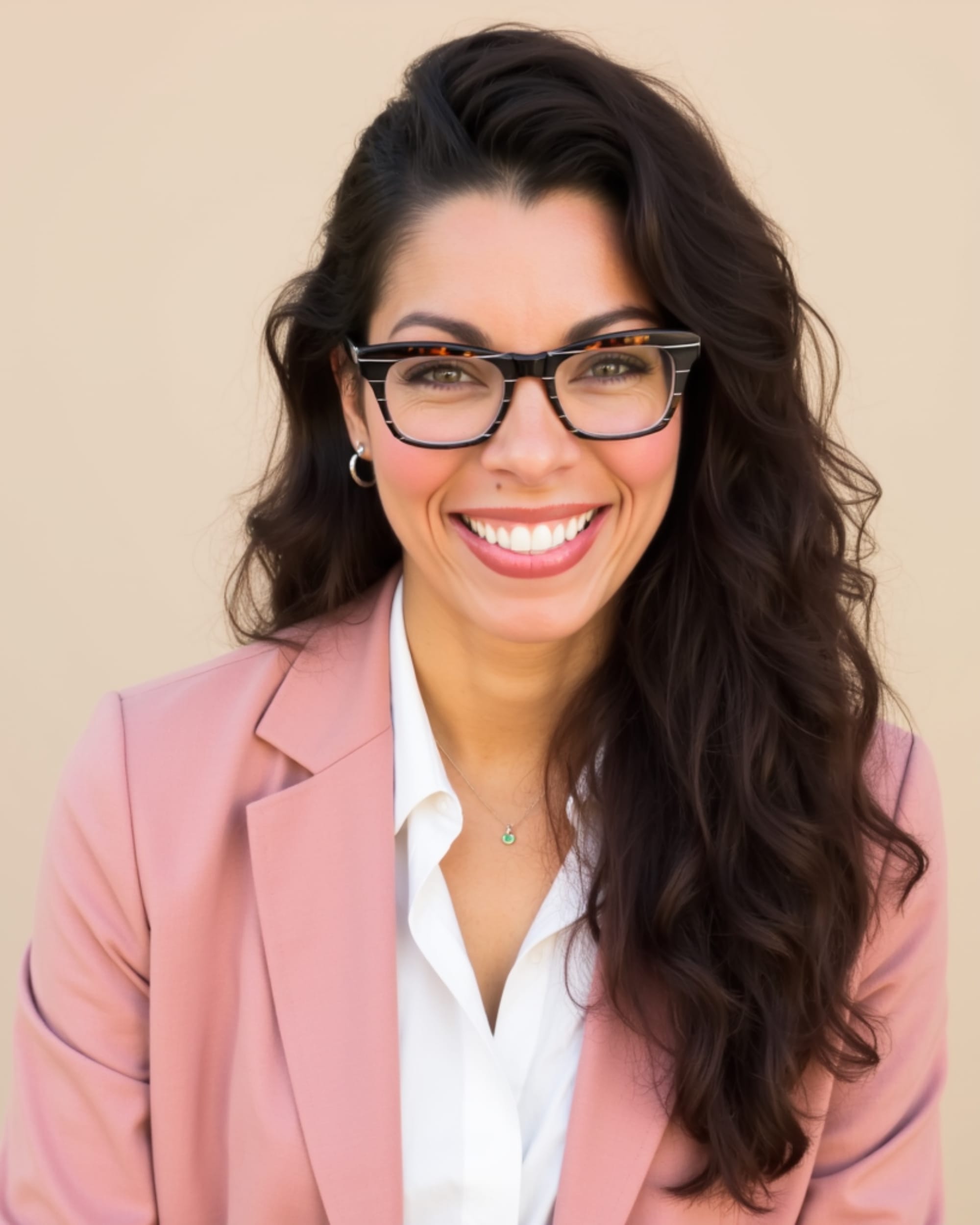
Schedule a meeting with our founder, Dr. Rosa, to explore how we can help broaden your impact.
Learn More
1. Evidence-based impact measurement and communication.
2. Lasting national and local partnerships with STEM organizations.
3. Impact-centered professional development for students.


Member discussion