Less than 2% of STEM professionals are Black women—and in science specifically, that number drops even lower. This isn't just a diversity problem—it's an innovation crisis.
When brilliant scientists struggle to translate their academic training into industry impact, it's not about technical skills. It's about access, representation, and understanding pathways that remain invisible to most graduate students.
Dr. Carmen Banks knows this challenge intimately. Now, as founder and CEO of Melanin Science, she's dismantling these barriers—creating accessible routes for underrepresented scientists to transform their research skills into industry impact.
Meet Dr. Carmen Banks
Dr. Carmen Banks is a cell and molecular biologist who built her career at early-stage biotech startups, working across food tech, ag tech, and pharma. As a Black woman scientist, she experienced firsthand how invisible industry pathways remain for underrepresented researchers. But her journey didn't follow the traditional academic path she initially envisioned.
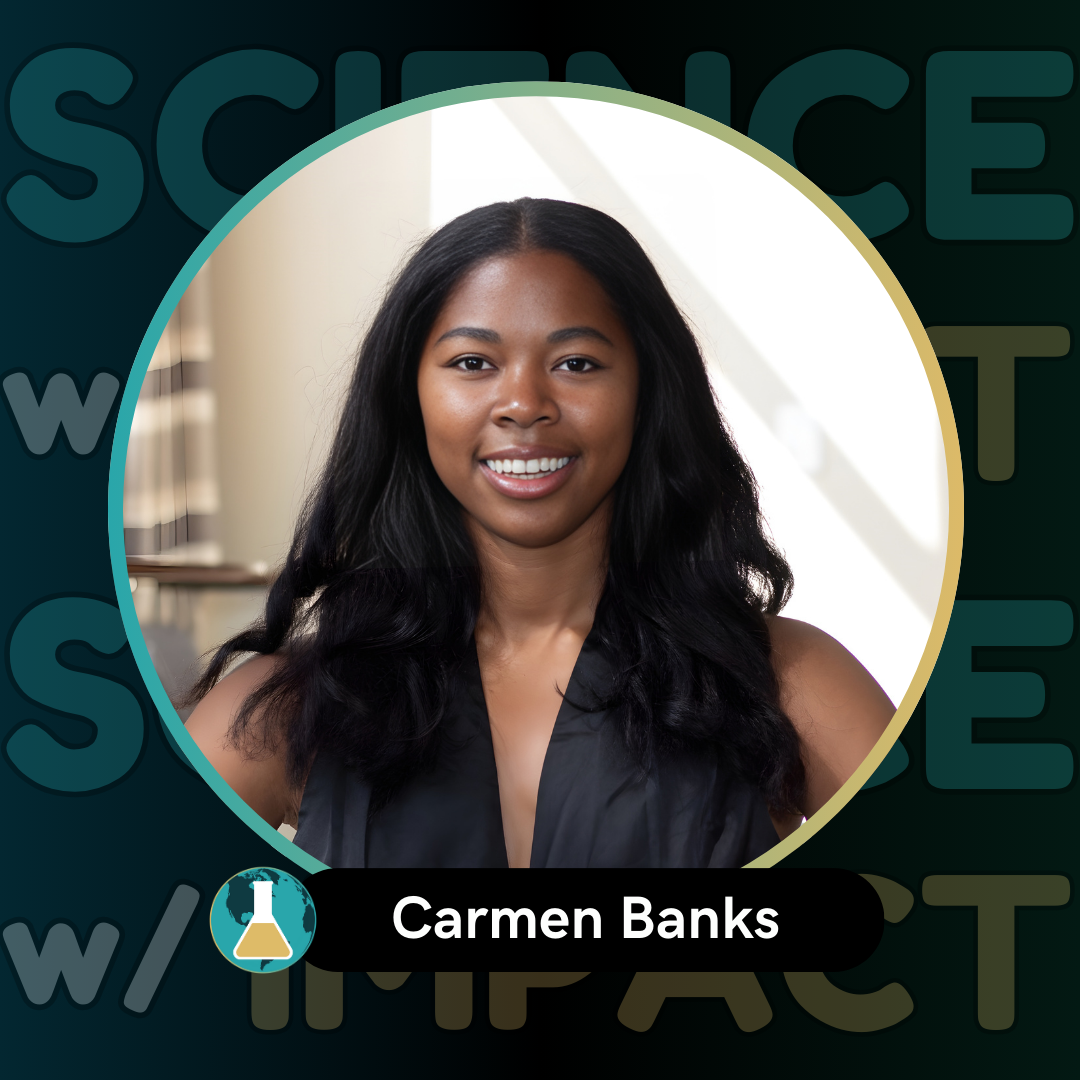
As an undergraduate, Carmen thought she wanted to be a veterinarian specializing in reptiles. A position in a poultry nutrition lab quickly taught her that vet school wasn't her calling. "I very quickly realized I hated working with chickens and vet school was not for me," she shares.
What changed everything was an unexpected opportunity at a USDA plant molecular diagnostics lab. Despite seeming unrelated to her degree, this experience opened her eyes to the independence, curiosity, and impact possible as a bench scientist.
"I realized I loved molecular biology. I loved the independence of working in a lab, and I loved the curiosity aspect of being a scientist and being able to ask and answer these really cool and important questions that are impacting the world around us."
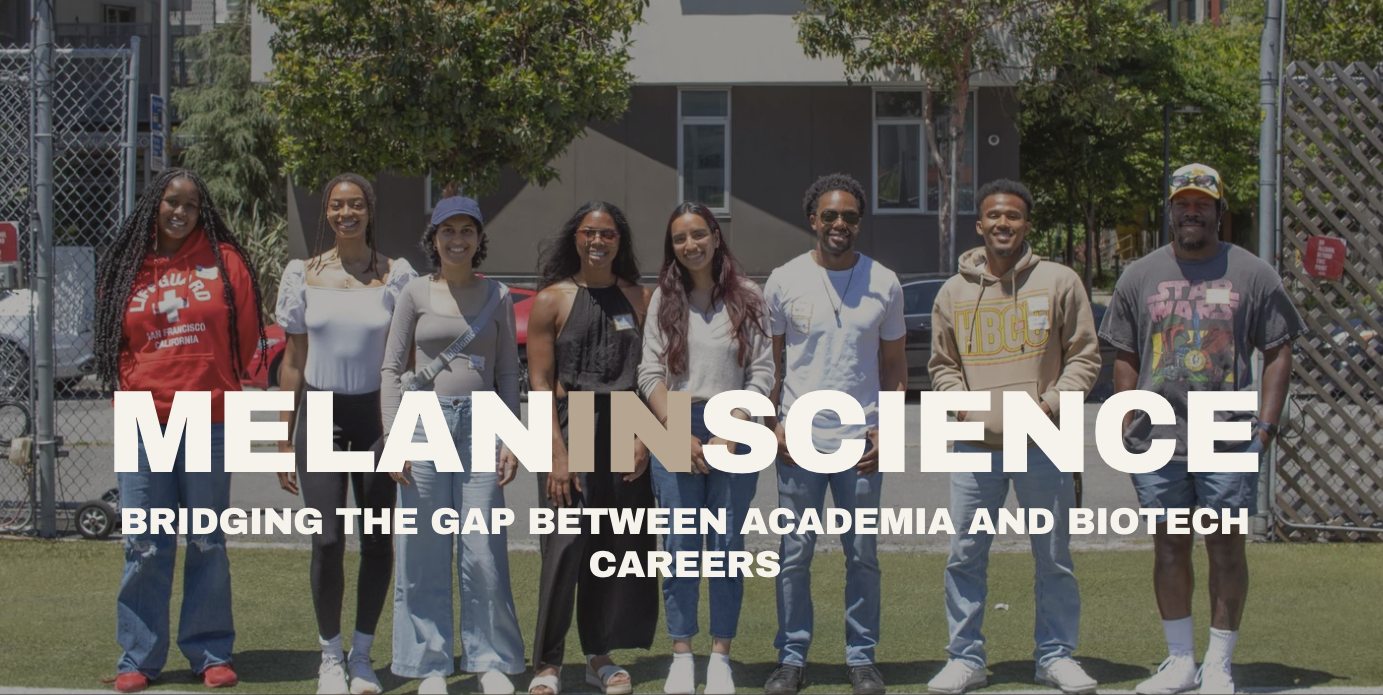
Today, Carmen is founder and CEO of Melanin Science, a workforce development company creating pathways for underrepresented students and early career professionals into biotech and biopharma careers. In just two years, Melanin Science has grown to serve over 1,000 students and professionals.
The Industry Path Less Traveled
For many graduate students, academia feels like the only path forward—the expected destination after years of training. But Carmen's journey reveals a different trajectory, one where scientific skills translate into immediate, tangible impact across diverse industries.
Carmen's career spans cultivated meat, antibody development, and plant pathology—demonstrating that diverse technical experiences build adaptable scientists. "Although the host species might be different, a lot of the techniques and the thinking is the same," she explains.
This versatility challenges the common fear that switching fields or contexts means starting over. Instead, Carmen shows how fundamental scientific thinking—experimental design, troubleshooting, hypothesis testing—creates a foundation that applies across contexts.
Why Industry Feels Different:
Visible Impact
Ask Carmen about the most striking difference between academia and industry, and her answer is immediate: visibility of impact.
"I could literally see this experiment led to X, like literally returns in our partnership," Carmen describes. "Me improving the cell line meant that this cultivated meat company could produce X tons more of cultivated chicken."
This visible, rapid impact addresses what many graduate students experience: existential questions about whether their research actually matters beyond citations and impact factors. In academia, seeing your work's impact might take 3-5 years. At a startup, you'll see it in 6-18 months.
"When you're in a startup environment, especially early stage, your impact is very visible," Carmen emphasizes. "You're often reporting directly to your senior leadership team, whether that be your CTO, your CEO. You can see how your work directly contributes to company milestones and business outcomes."
Pace, Priorities, and Communication
Beyond impact visibility, the day-to-day culture of industry work differs significantly from academic research. Understanding these differences helps scientists evaluate whether industry aligns with their working style.
Pace and Priorities: The "fail fast" mentality contrasts sharply with academic research. In startups, Carmen explains, "If something isn't working, we don't necessarily care why it didn't work, we just need it to work. So you better figure out some other method to make it work or an alternative path."
Academic research often values understanding the fundamental mechanisms behind failures—sometimes that understanding drives entire publications. Industry prioritizes solutions over explanations. "It's not that the 'why' doesn't matter," Carmen clarifies, "but when you're racing toward a product launch or investor milestone, finding what works takes precedence over understanding why something didn't."
Communication: Perhaps the biggest adjustment involves how you talk about your work. "As scientists we tend to be very granular and we tend to give a lot of detail," Carmen notes. "For folks who are sitting on the senior leadership team who might not have as much time, they are mainly concerned with what are the results, what are the impact and why should I care?"
The focus becomes translating technical work into business impact rather than comprehensive experimental narratives. This shift prepares scientists not just for industry roles, but for communicating with funders, policy makers, and the public—skills valuable across any career path.
Your Skills Transfer More Than You Think
One of the most common anxieties Carmen hears from graduate students centers on whether their specific expertise translates to industry opportunities. Her response is reassuring.
"If you're a grad student like myself who didn't have five publications at the end of your PhD, don't fret because industry doesn't really care about how many papers you've published," Carmen emphasizes.
Industry values innovative thinking, adaptability, and the ability to solve real-world problems—skills graduate students develop throughout their research but may not recognize as their primary contributions.
"The experimental mindset you develop in graduate school—forming hypotheses, designing controls, troubleshooting when things don't work—that's what companies need," Carmen explains. "They can teach you their specific techniques. They can't teach you how to think like a scientist."
Examples of skill translation:
- Experimental design for plant pathology → Cell culture optimization in biotech
- Troubleshooting failed experiments → Rapid iteration in product development
- Literature review skills → Competitive landscape analysis
- Grant writing → Investor pitch development
Choosing Your Stage: Understanding the Startup Ecosystem
Not all industry opportunities are created equal. Carmen emphasizes that understanding startup stages is crucial for finding the right fit—and for setting realistic expectations about what each stage demands and offers.
"One of the biggest mistakes I see scientists make is not asking about the company stage during interviews," Carmen shares. "Each stage offers different trade-offs between stability, impact visibility, and growth opportunities."
Pre-seed and seed companies:
These are proof-of-concept stage companies with lower funding and shorter runway (often 1-2 years). You'll wear multiple hats, work directly with founders, and see immediate impact—but job security is lower. Carmen describes this as "beautiful chaos—you're building everything from scratch." Best for scientists who thrive in ambiguity and want maximum influence on company direction.
Series A-C companies:
Mid-stage startups with more structure and stability. Series B and C companies typically have 50-200+ employees, more defined roles, and established processes. "You still have that startup energy and rapid impact, but with more support systems in place," Carmen notes. Best for scientists who want visible impact with more organizational support.
Beyond Series C:
Companies moving toward IPO with enterprise-level resources while maintaining some startup agility. Best for scientists seeking stability with innovation opportunities.
Carmen's advice: "Think about what you need to thrive. Do you need structure and clear processes, or do you energize from building something from scratch? There's no wrong answer—just different paths." Understanding these distinctions helps scientists ask better questions during interviews and evaluate opportunities against their personal priorities and working styles.
Red Flags and Green Flags: Evaluating Opportunities
Beyond understanding company stages, Carmen shares practical criteria for evaluating specific opportunities—questions that help scientists distinguish between startups where they'll thrive and those that may set them up for frustration.
Financial Health: The Runway Question
"Always, always ask about runway," Carmen advises. Runway refers to the amount of capital remaining before the company runs out of money. A company with only one year of runway presents significant job instability risks, while two to five years suggests more security.
"You want to know you'll have time to make meaningful contributions before the next funding conversation," Carmen notes. "If they're going to run out of money in six months, you'll spend most of your time there watching leadership scramble for funding rather than doing the science you were hired to do." Don't be afraid to ask this directly during interviews—transparent companies will share this information, while evasiveness itself serves as a red flag.
Scientific Realism: Do They Understand Timelines?
Assess whether leadership understands scientific timelines. Carmen offers a concrete example: "If you have a background in transcriptional regulation of a particular receptor, and you know from your experience that figuring out whatever experimental question you had could take up to two years, and this startup is communicating that they're gonna find the answer to this question in three months—that could be a red flag."
Unrealistic timelines often indicate founders without scientific backgrounds who may not appreciate experimental complexity—setting you up for impossible expectations.
Green Flags to Look For
Scientist-founders: Leadership with research backgrounds who understand experimental realities and can set realistic milestones.
Established HR systems: Professional development opportunities, clear growth pathways, and support systems that foster long-term success.
Scientific exploration: Opportunities to pursue tangential projects that add value to the company—indicating they value innovation beyond immediate product needs.
Transparent communication: Willingness to discuss runway, funding strategy, and long-term vision during the interview process.
These indicators help you distinguish between startups where scientists thrive and those where scientific work becomes frustrating due to misaligned expectations.
Key Lessons for Sustaining Diversity Initiatives
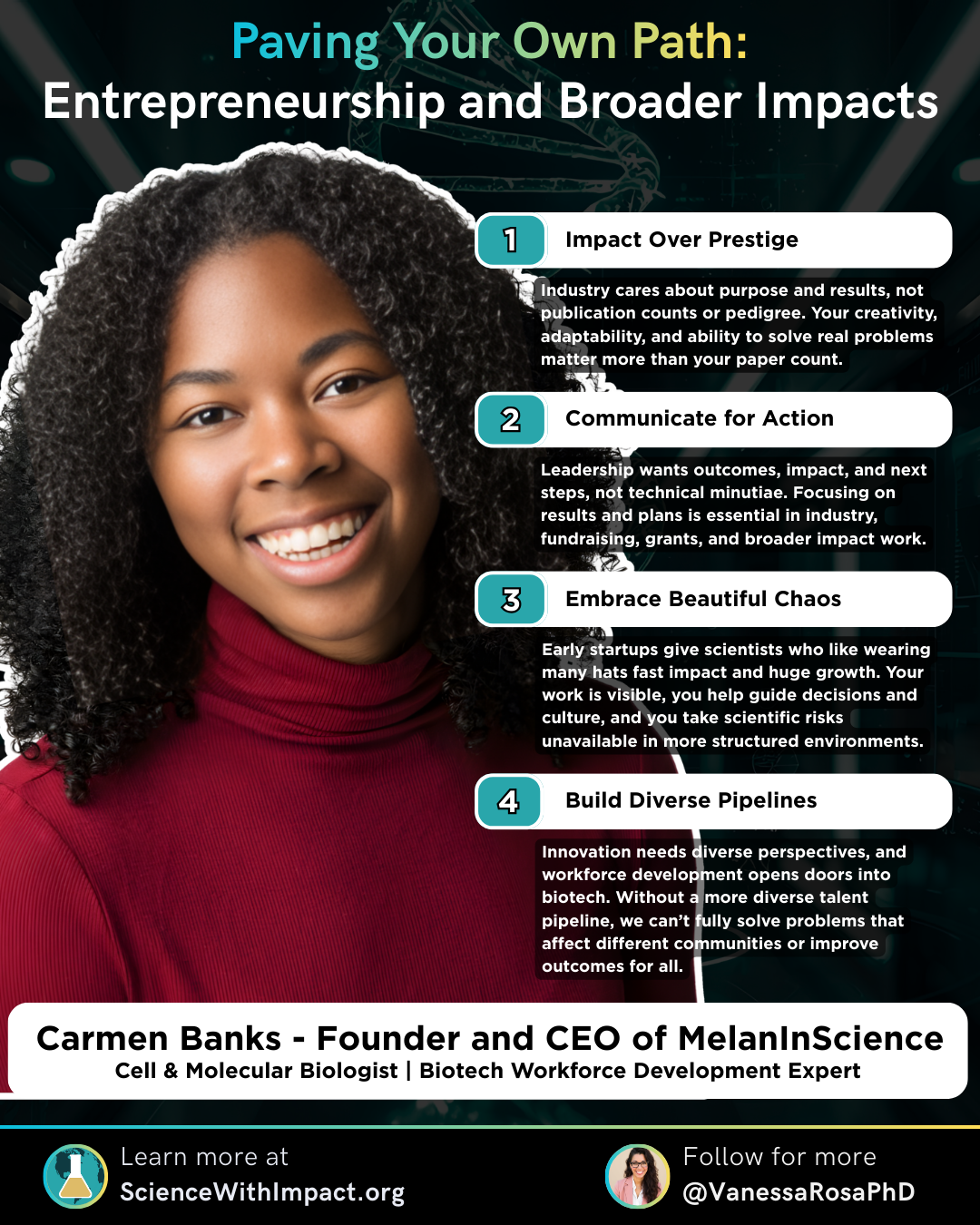
Impact Over Prestige
Industry values purpose and results over publication counts and institutional pedigree.
Carmen challenges the academic emphasis on prestigious institutions and extensive publication records: "If you're a grad student like myself who didn't have five publications at the end of your PhD, don't fret because industry doesn't really care about how many papers you've published." This insight liberates scientists whose worth extends beyond traditional academic metrics. The focus shifts to innovative thinking, adaptability, and tangible contributions to solving real-world problems—qualities that drive biotech innovation forward.
Communicate for Action
Translate technical work into impact statements that drive business decisions.
"As scientists we tend to be very granular and we tend to give a lot of detail," Carmen notes. "For folks who are sitting on the senior leadership team who might not have as much time, they are mainly concerned with what are the results, what are the impact and why should I care?" This communication shift proves essential not just in industry, but in fundraising, grant writing, and broader impact activities. Learning to articulate "what were the results from the experiment, and then what is my plan to move forward" rather than listing every technique used transforms how scientists connect their work to meaningful outcomes.
Embrace Beautiful Chaos
Early-stage startups reward adaptability, rapid learning, and comfort with uncertainty.
The "beautiful chaos" of early-stage startups isn't for everyone, but for scientists who thrive on wearing multiple hats and seeing immediate impact, it offers unparalleled opportunities. "Your impact is very visible. You're often reporting directly to your senior leadership team, whether that be your CTO, your CEO," Carmen describes. This environment allows scientists to participate in business decisions, shape company culture, and take scientific risks unavailable in more structured settings. The key is knowing whether you need more structure (pointing toward later-stage startups) or embrace the fast-paced, experimental nature of building something from the ground up.
Build Diverse Pipelines
Innovation requires diverse perspectives; workforce development creates accessible pathways.
Carmen founded Melanin Science to address a critical gap: "A lot of students who don't wanna go into academia, but biotech and biopharma tends to be this black box that no one knows how to get into." The company creates a circular economy by training workforce-ready talent and connecting them with companies seeking diverse, skilled professionals—reducing recruitment costs while increasing retention. "We won't be able to address all of these problems that exist for different demographics that could impact the world for everyone if we don't increase the diversity within the workforce," she emphasizes. Building these pipelines benefits not just underrepresented students, but the entire innovation ecosystem that depends on diverse problem-solving approaches.
Conclusion: Building Your Path Forward
The transition from academia to industry isn't about abandoning scientific rigor—it's about channeling that rigor toward problems where you can see tangible impact. Whether you're drawn to the structured innovation of a Series B company or the "beautiful chaos" of an early-stage startup, the scientific thinking you've developed translates directly into value.
Carmen's journey illustrates that there's no single "right" path for scientists. Success comes from understanding what motivates you, asking strategic questions about opportunities, and recognizing that your skills extend far beyond your specific research topic. The experimental mindset, adaptability, and problem-solving abilities you've honed in graduate school are precisely what drive innovation in biotech and beyond.
Most importantly, remember that exploring industry options doesn't mean closing doors—it means opening new ones. The skills you develop in startup environments—rapid iteration, business communication, cross-functional collaboration—enhance your ability to create impact regardless of where your career ultimately leads. The question isn't whether you're "good enough" for industry; it's whether industry aligns with how you want to contribute to science.
Taking Action: Your Next Steps
If you're a graduate student or early career researcher considering industry paths:
- Research startups in your area: Identify companies working on problems that align with your passions and values.
- Talk to people working in startups: Ask about their experiences at different company stages to understand what might fit your working style.
- Communicate your career goals clearly: Let your advisor know if you're pursuing industry so they can help position your research project to develop industry-relevant skills.
- Ask strategic interview questions: Inquire about runway, company goals, and whether leadership has scientific expertise.
- Connect with workforce development programs: Organizations like Melanin Science provide training, networking, and internship opportunities specifically designed to bridge the academia-industry gap.
For mentors and program directors:
- Diversify your recruitment beyond prestigious institutions: Students from all backgrounds bring valuable perspectives and hunger to learn.
- Focus on potential over pedigree: Look for adaptability, innovative thinking, and non-technical skills alongside technical competence.
- Drive DE&I initiatives from the top down: Bottom-up efforts stall without senior leadership buy-in and actionable plans.
Join the Conversation
Thank you to Dr. Carmen Banks for sharing her journey and the practical wisdom that will help countless researchers discover their own paths beyond traditional academic boundaries. Your work through Melanin Science is creating the diverse scientific workforce our world needs to address complex challenges.
Thank you to our readers who recognize that impactful science requires diverse voices, accessible pathways, and systems that value purpose over prestige. Your commitment to broadening participation strengthens the entire research enterprise.
If you're ready to expand your research program's societal impact through strategic communication, workforce development, or broader impact planning, we'd love to discuss how Science with Impact can support your goals. Schedule a consultation with Dr. Rosa to explore research support services tailored to your needs.

Let's collaborate
Schedule a meeting with our founder, Dr. Rosa, to explore how we can help broaden your impact.
Learn More
1. Evidence-based impact measurement and communication.
2. Lasting national and local partnerships with STEM organizations.
3. Impact-centered professional development for students.


Member discussion