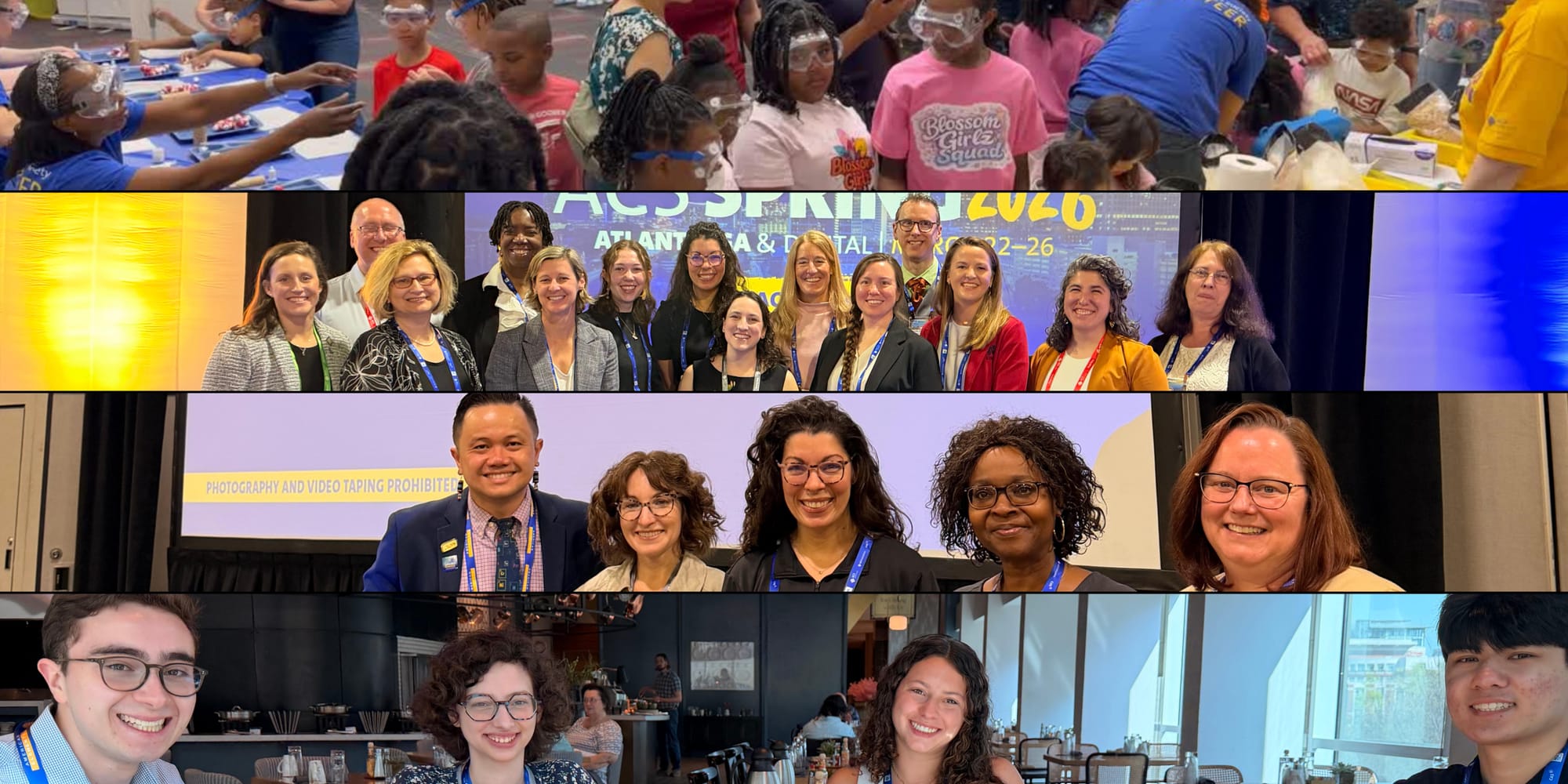
From groundbreaking keynote presentations to the incredible energy at Kids Zone, here is our exclusive debrief of the best moments we caught during ACS Spring 2026 in Atlanta.
If you missed the conference, here’s the short version:
Throughout ACS Spring 2026, were clear signals that the next round of advancements in chemistry will come from better translation systems.
The question I saw as a common through-line was: How can chemists work together to build experiences that make molecular ideas easier to grasp (through hands-on stations, interactive simulations, and strong narrative scaffolds)?
In this newsletter, we share usable methods, what made them effective, and how chemists can bring the same rigor to outreach, teaching, and workforce development without needing a new lab, a bigger budget, or more time.
ACS Kids Zone
At the ACS Spring 2026 Kids Zone, the outreach design made a strong case for evaluation-by-default. The event, hosted by ACS President Rigoberto Hernandez and the Committee on Community Activities at Morehouse College in Atlanta, represented by Juana Mendenhall, Ph.D., featured forest-themed stations that drew families into real chemical concepts through simple, tactile experiments.
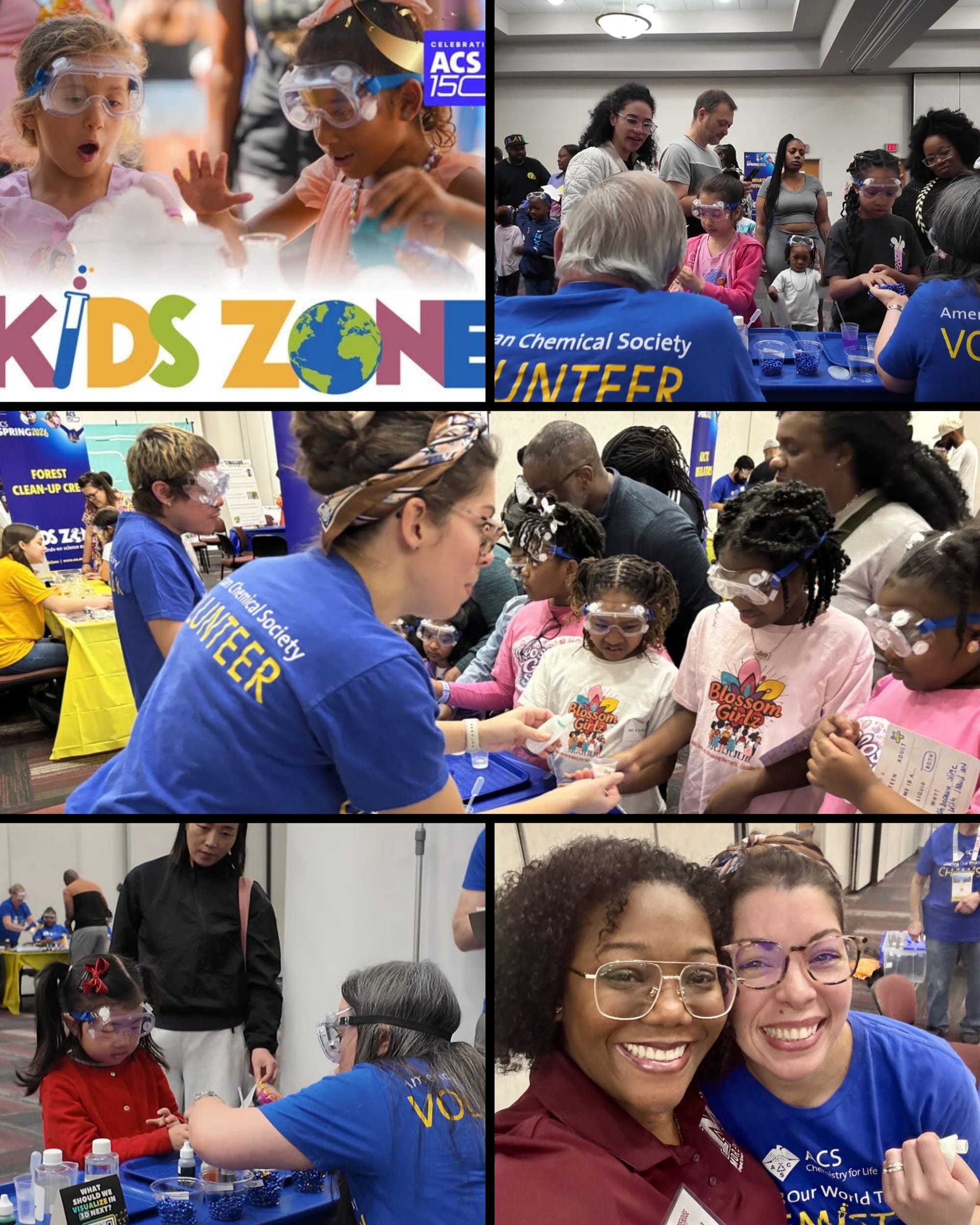
The “Slime” station stood out because (slime and) it wasn’t just a demo, participants got to actively decide on the consistency of their polymer network by adding “chemical connectors” (borate ions) or “bond breakers” (acetic acid).
A video play-through of our slime game. Click the hyperlink below to play!
Using our Slime Video Game, bead models, and chemistry modeling kits, participants gained a multi-model experience that revealed the hidden mechanism of hydrogen bonding behind their favorite goo (see if they liked it in the next image ⬇️).
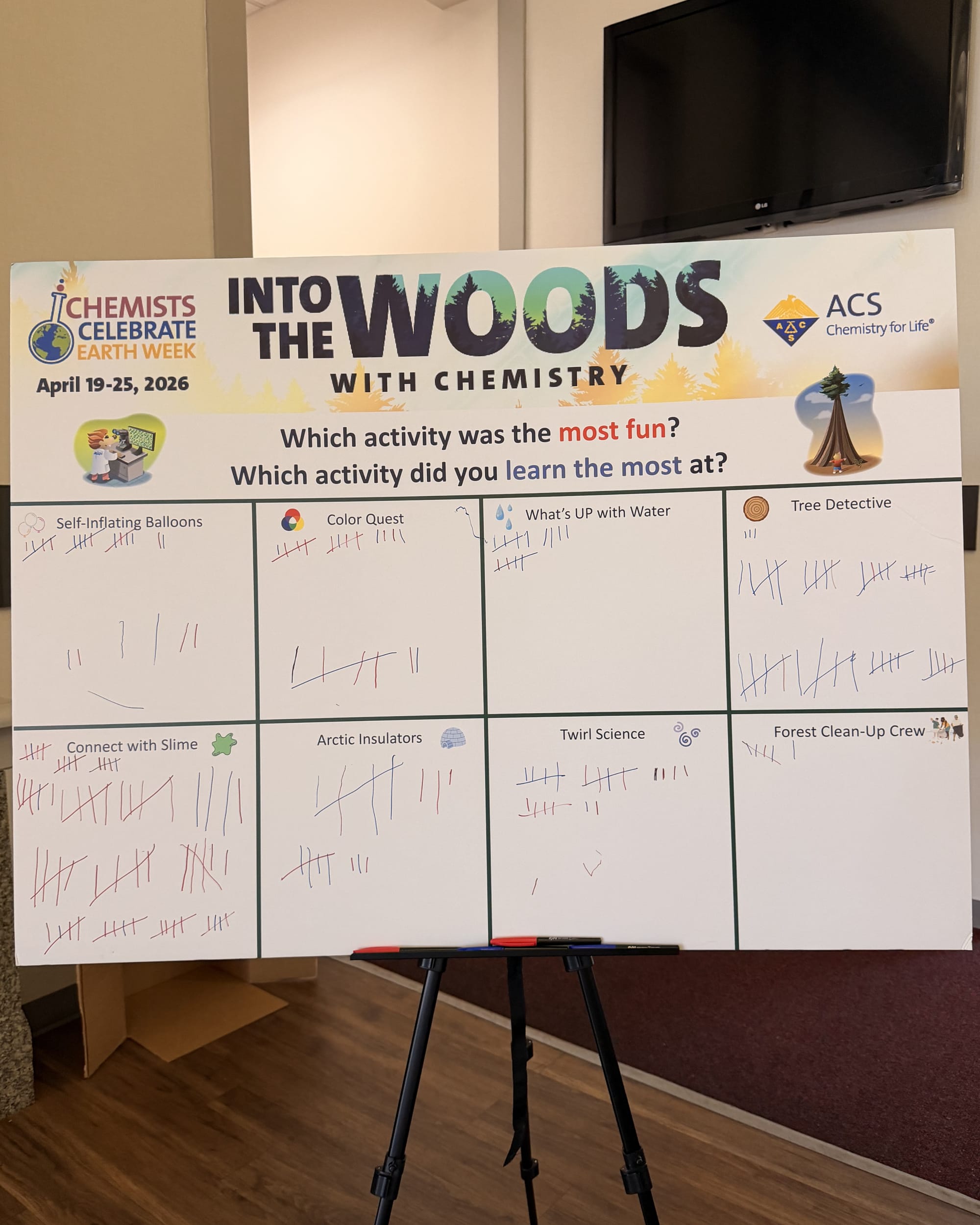
Paired with hands-on polymer play was an evaluation setup that didn’t require a lab, an IRB packet, or a survey platform: a pre/post index-card approach plus live observation for engagement:
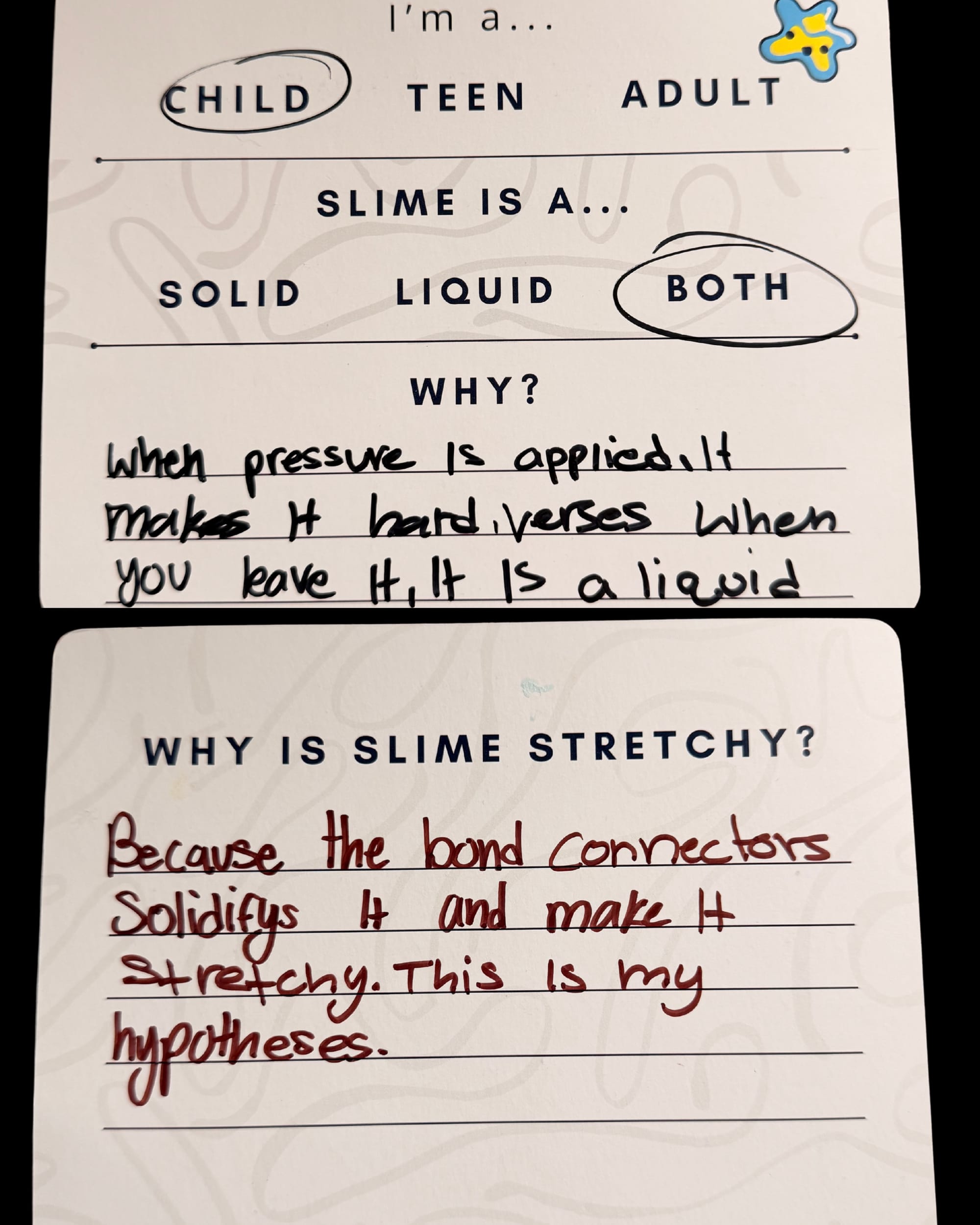
The most useful takeaway for chemists running outreach is procedural, not philosophical: if you want data you can report later, bake the measurement into the flow of the station, keep the prompt child-accessible (one question, repeated), and design collection so it’s as easy as dropping a card in a box. Credit here goes to Rachel Creager for ensuring a “capture evidence” mindset into an event that could easily have remained more anecdotal (go Rachel!). We’ll be interviewing Rachel for an upcoming episode of the Science with Impact Podcast soon!
Click here to learn more about ACS Kids Zone and get involved at the Fall 2026 ACS Kids Zone in Chicago, IL.
Women Chemists Committee
The ACS Women Chemists Committee session “Narrating Knowledge: Redefining Chemistry through Innovative Media” offered a practical blueprint for closing the mental gap our abstract science can create:
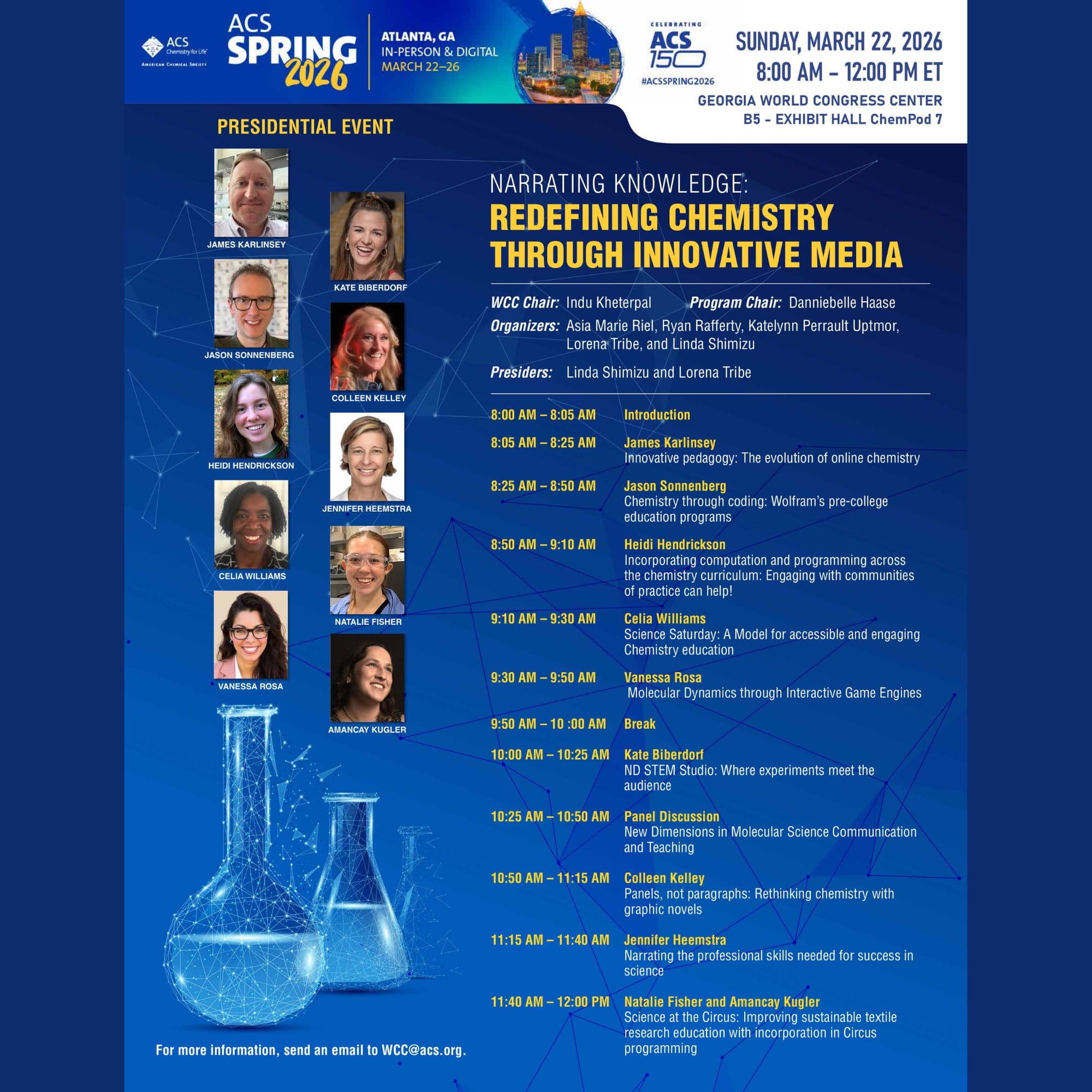
Eight phenomenal talks were given, and we were graced with the presence of the current, former, and incoming ACS Presidents for a Panel on connecting our science to broader audiences:
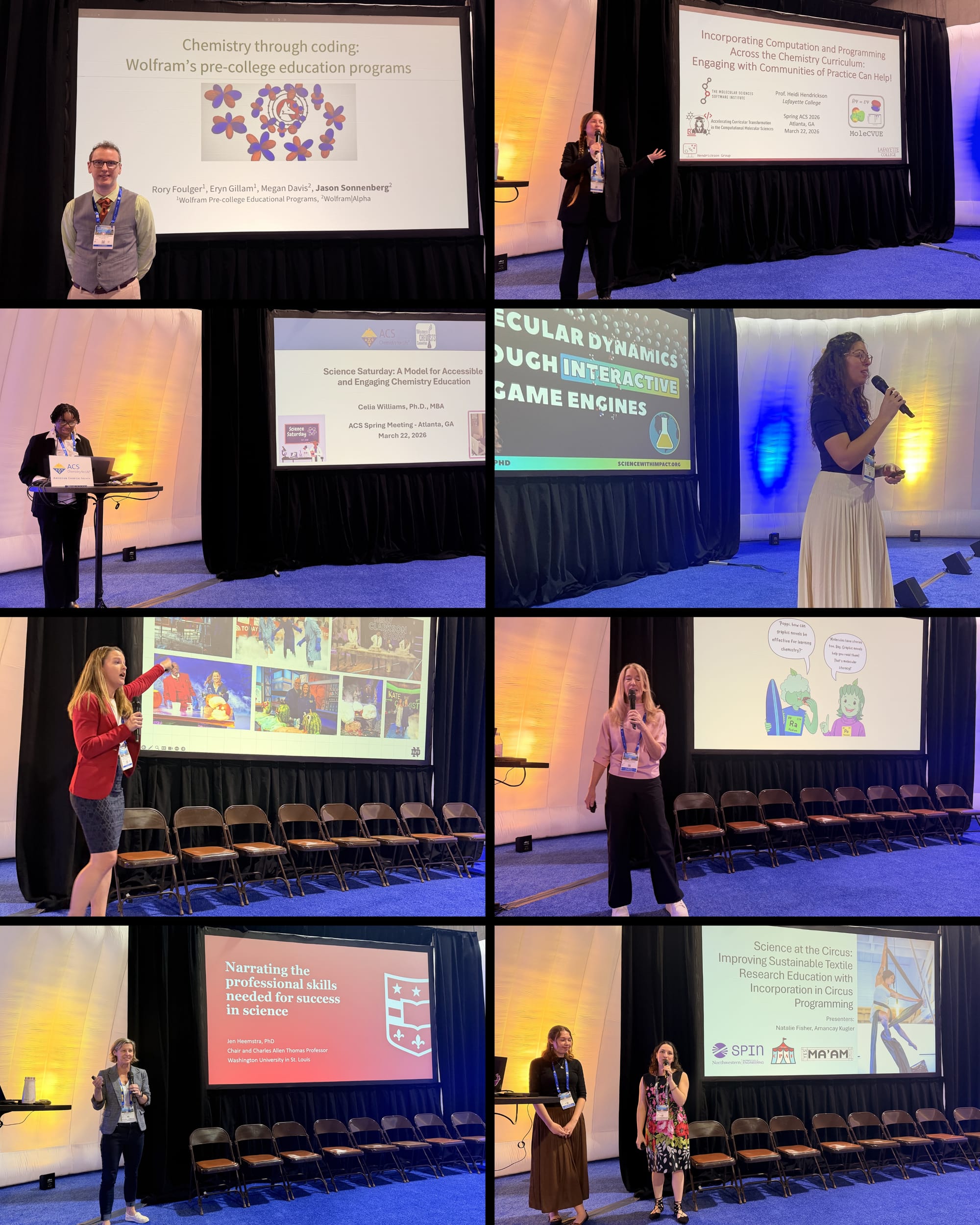
Key takeaways included the power of:
- Jason L. Sonnenberg - Experiential learning in teaching students to compute-to-learn with Wolfram|Alpha LLC.
- Heidi Hendrickson - Communities of practice like MoleCVUE Consortium, where computation is changing how undergrads visualize chemistry.
- Celia Williams - Making chemistry accessible to children for fun, Science Saturday experiments that can be done at home.
- Kate Biberdorf - Science as entertainment! Finding the narrative in your science to make connections before content.
- Colleen Kelley, Ph.D. - Teaching chemistry the way we teach reading to build molecular literacy well before high school.
- Jen Heemstra - Mentorship and retaining a spirit of “always a mentor, always a mentee” in our professional development.
- Natalie Fisher & Amancay CT Kugler - The circus to bring attention, entertainment, and awareness to real-world science challenges (like reusable textiles).
A slide from my talk explaining the value of Genesis, my interactive chemistry simulator.
In my “Molecular dynamics through interactive game engines” talk, I debuted what I’ve been working on since December 2025 (a game engine that takes us from viewing 3D molecular interactions to experiencing them in real time) with atomic agents programmed to model Brownian motion, collision-driven behavior, attraction/repulsion, and bonding constraints.
All together, we had a wonderful time exchanging ideas, and I look forward to future collaborations with these incredible scholars!
Beyond the Beaker
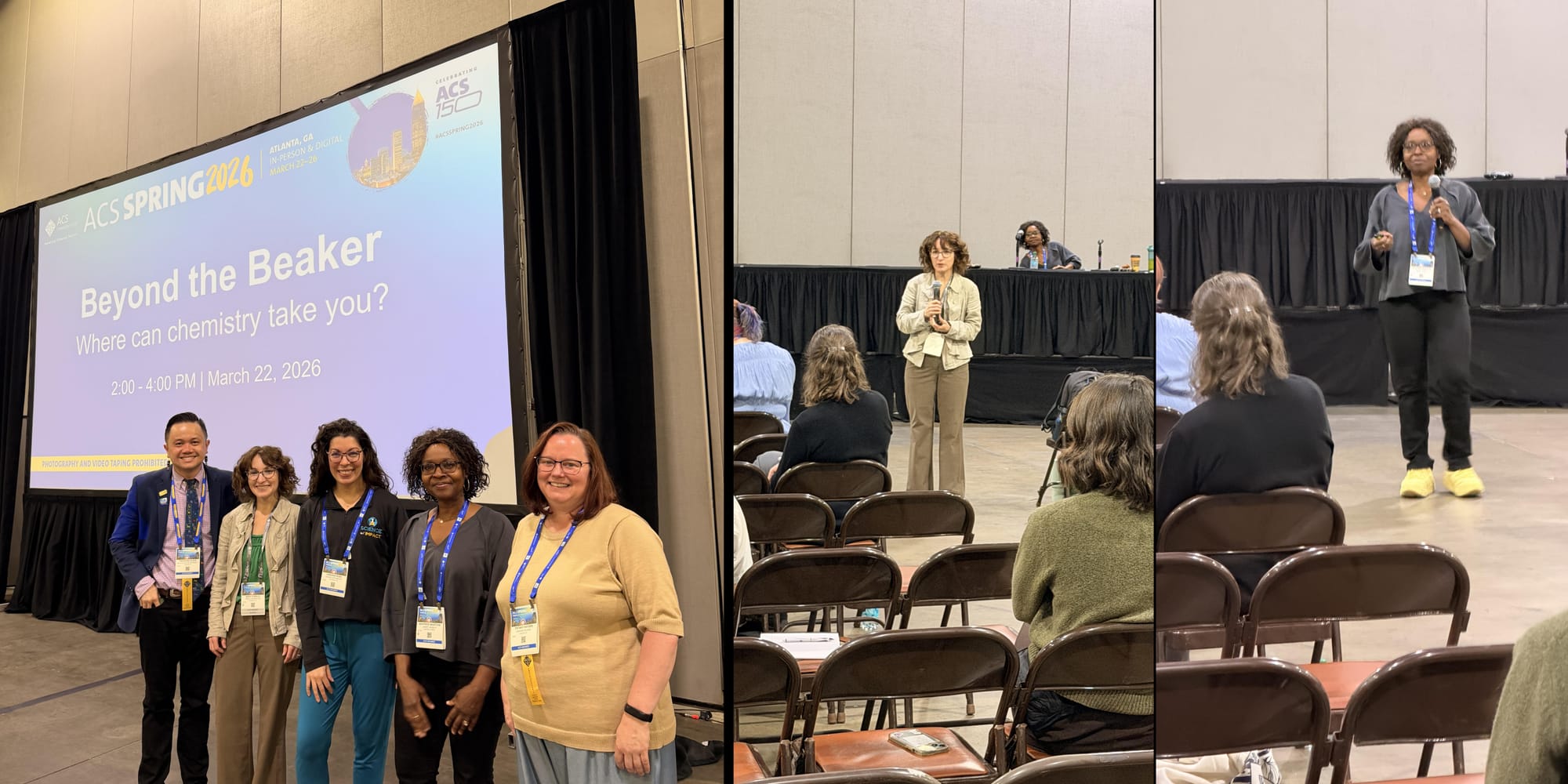
The undergraduate-facing symposium “Beyond The Beaker: Where Can Chemistry Take You?” reinforced a different but equally actionable point: scientific skill alone isn’t what broadens impact; translation does.
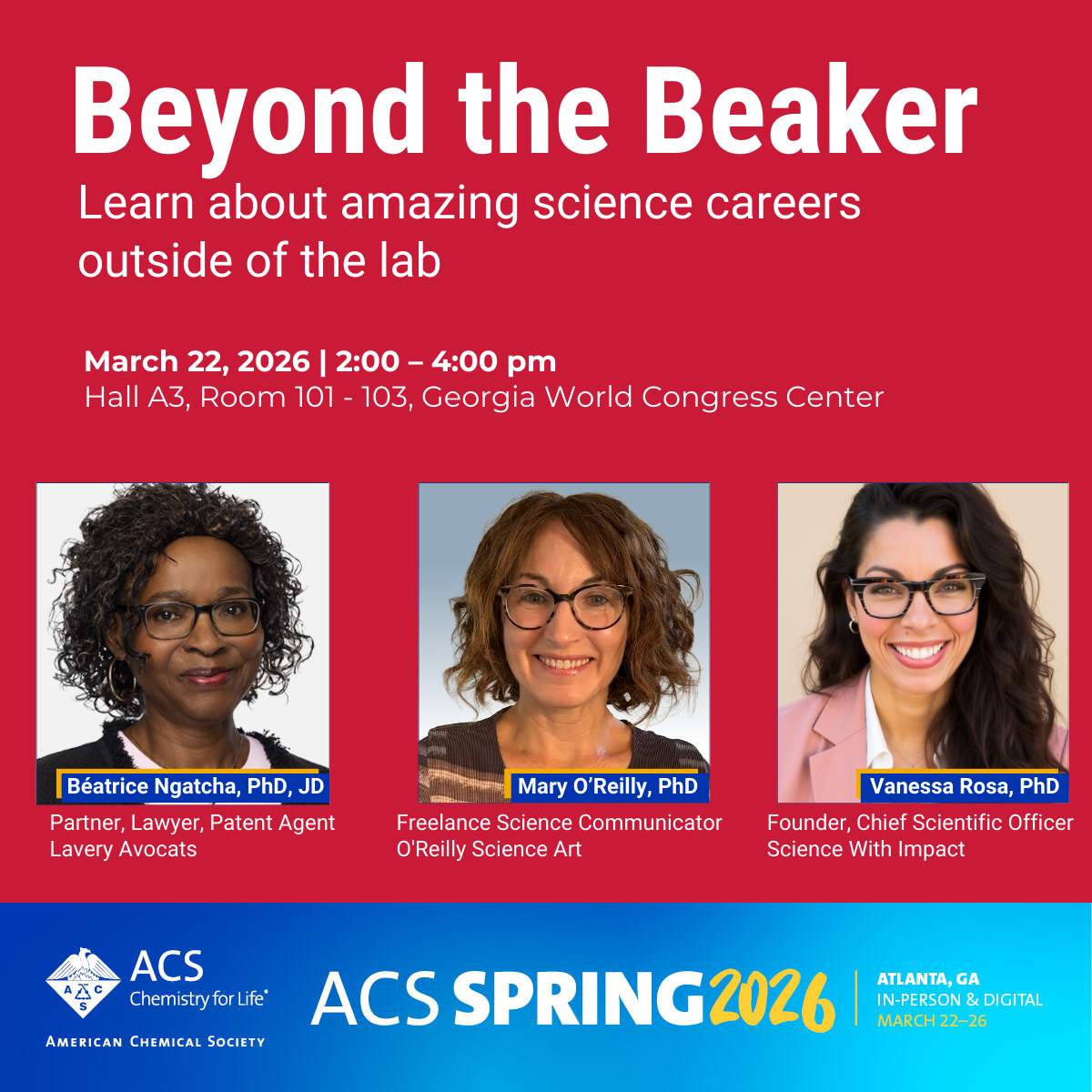
Here, Beatrice Ngatcha spoke about her life as a chemist who leads her firm in supporting scientific innovations through the patent process, Mary O'Reilly shared insights from her expertise in translating scientific breakthroughs into artful figures, and I shared two questions essential for my own navigating of an alternative career path:
The organizing committee explicitly asked for tactics students can use: how to navigate environments, identify high-demand skills, describe day-to-day work, and convert chemistry training into roles that matter outside the lab. We were able to share multiple legitimate pathways and make it clear that communication and evaluation are not soft extras; they are force multipliers for scientific work.
Undergraduate Researchers' 1st National Conference
Finally, I had the incredible honor of hosting a brunch for and supporting MONET (NSF Center for Molecularly Optimized Networks) Undergraduate Scholars as they attended their first national conference!
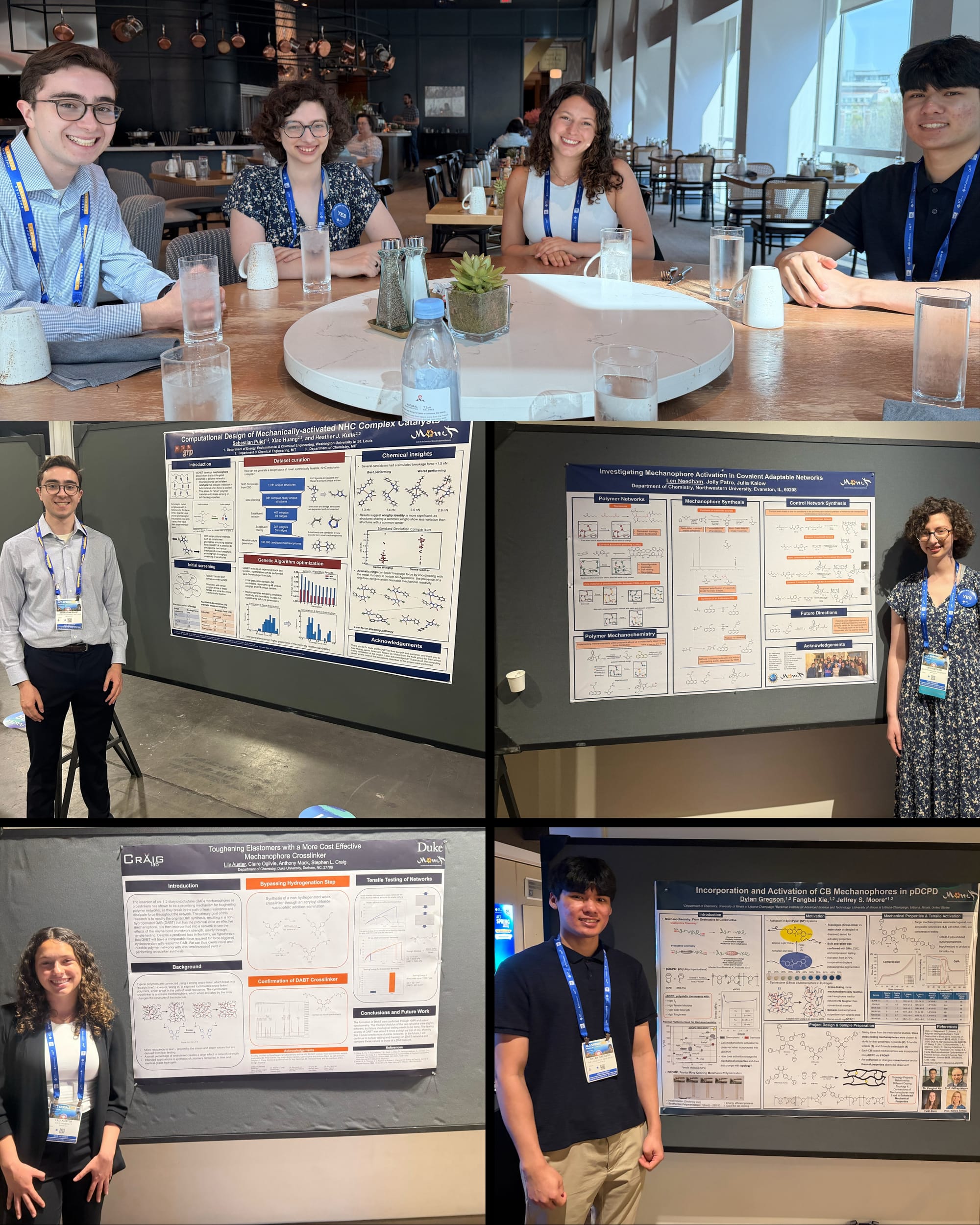
Congratulations to Sebastian Pujet of Heather Kulik's Lab at MIT, Len needham of Julia Kalow's Lab at Northwestern, Lily Auster of Stephen Craig's Lab at Duke, and Dylan Gregson of Jeffrey Moore's Lab at UIUC for achieving this huge milestone in their STEM careers!
The MONET Undergraduate Scholar Conference Travel Awards work is the clearest example of “impact as an engineered pipeline.” The program supported seven undergraduates presenting at ACS Spring 2026 and SACNAS NDiSTEM, with approximately $7,000 invested across travel, registration, and presentation costs. The progress tracking shows what it really takes to turn “a funded opportunity” into “a student who actually gets to the conference prepared”: confirming abstracts/purpose/budgets, recommendations, organization membership, abstract submission and acceptance, travel booking, registration, and the final deliverables that are easy to underestimate (for example, poster readiness and even poster photos).
The takeaway for any lab, department, or center is blunt: money is necessary, but the system is what makes it sufficient, and simple visibility into bottlenecks can be the difference between “supported” and “successful.”
What's Next?
Thank you to everyone who made these outcomes possible: the organizers, volunteers, and collaborators who built events that were both welcoming and rigorous, and who treated outreach, teaching, and student development as work that can be improved with evidence.
The next season of the Science with Impact Podcast will focus on 3D chemistry visualizations, the collaborators behind them, and more concrete ways scientists can expand their broader impacts, with an emphasis on what’s reproducible, measurable, and worth your time!


Member discussion