What if the most impactful thing you do as a scientist isn't your next publication?
Dr. Daniel McGarvey spent years following the traditional academic playbook—publishing, chasing high-impact journals, building his research portfolio. Then he noticed something troubling: despite an accelerating mountain of scientific literature, public trust in science wasn't growing proportionally. The research was piling up, but the impact wasn't following.
So he made a radical pivot. Instead of measuring success in citation counts, Dan started measuring it in the young scientists he could empower through the Emerge Program. Instead of optimizing for the next paper, he optimized for human connection and community building. The result? A self-sustaining network that now represents nearly 10% of attendees at major freshwater science conferences—and a model for how scientific impact can multiply through people, not just publications.
Meet Dr. Daniel McGarvey: From Traditional Academic to Community Architect
Dr. Daniel McGarvey didn't start his career planning to revolutionize how scientists build inclusive communities. As an associate professor of environmental studies at Virginia Commonwealth University, his traditional credentials are solid: fish ecology, freshwater science, macro-ecology, big data analysis and modeling. But somewhere along the way, he realized something profound—the work he was doing to address diversity and inclusion in STEM might actually create more lasting impact than any of his published research.
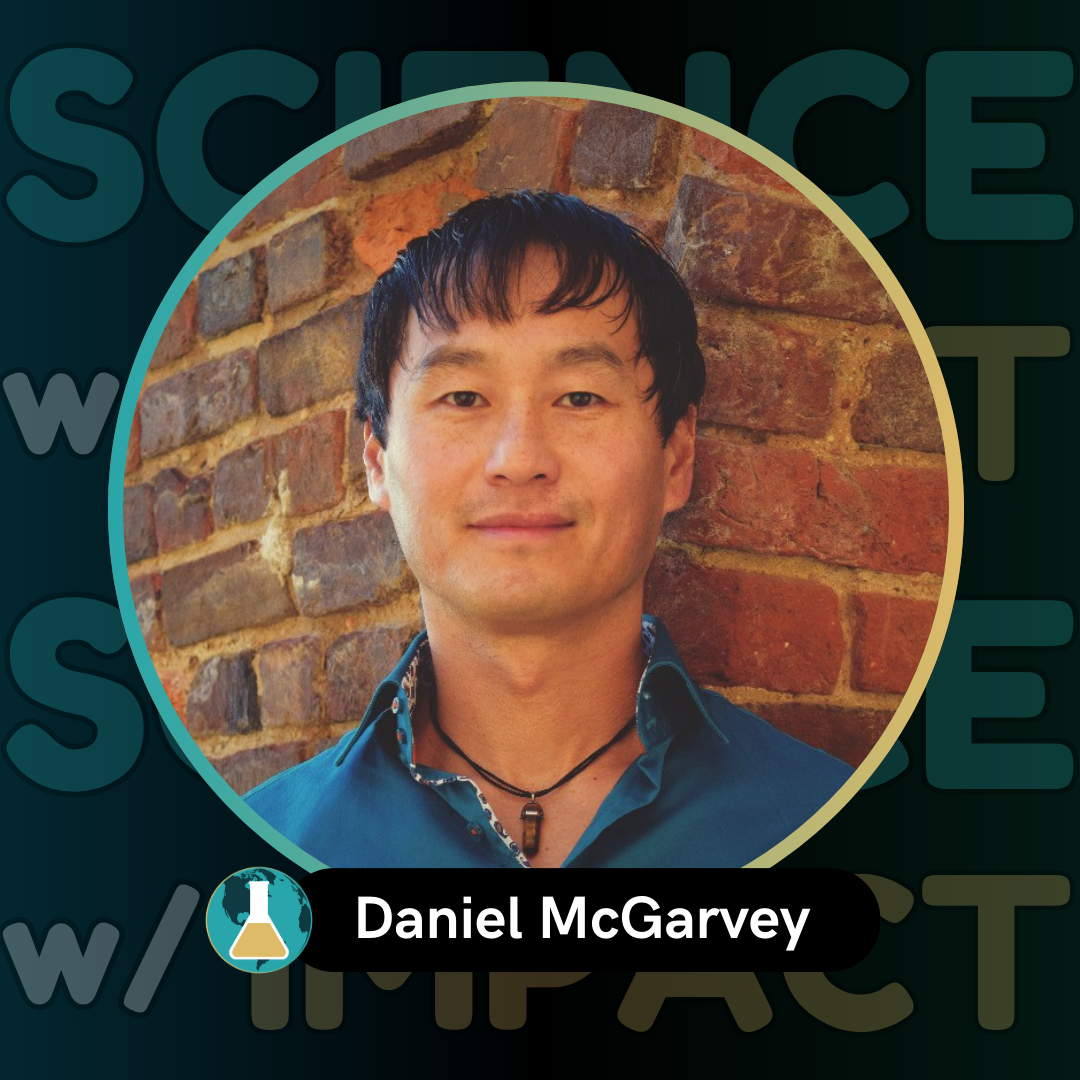
"I realized at some point that the work I was doing to try and address diversity and inclusion in STEM was probably going to be more impactful than any of the research that I was doing or publishing on fish ecology or freshwater science," Dan reflects.
Growing up in a diverse urban high school in Columbus, Ohio, Dan later spent years navigating predominantly homogeneous academic spaces—experiences that showed him firsthand how isolation shapes who persists in science and who doesn't. "I went to a pretty diverse high school in Columbus, Ohio, and then I went to college and grad school and spent a lot of time in pretty homogeneous spaces," he explains. "I think that experience of being in diverse spaces and then moving into less diverse spaces really shaped my understanding of who feels like they belong in science and who doesn't."
Rather than simply publishing about the problem, he decided to build the solution. As a key architect of the Emerge Program, Dan has helped create something remarkable: a self-sustaining community that now represents 8-10% of attendees at major freshwater science conferences.
"We've created this really wonderful network of people who support each other, who mentor each other, who collaborate with each other," Dan notes. "This isn't just a program—it's a movement that's reshaping an entire field's demographics, one cohort at a time."From Instars to Emerge: Building a 15-Year Program
The Problem: When More Science Doesn't Equal More Impact
Dan identifies a troubling disconnect in modern science: "The amount of published science out there is accelerating, and that's great. But this is an anecdotal observation—it seems kind of clear to me that that is not having a proportional effect on how the public reacts to what scientists think about the natural world."
He points to prestigious publications as an example: "When you look at the types of environmental science projects that make it into those most prestigious journals, so much of it is interesting but a lot of it is honestly just kind of preaching to the choir. We realize that glaciers are melting even faster than we feared and that the world is warming up faster. This is all important, but this is all stuff that we've known for a little while."
The real challenge? Before meaning can have impact again, scientists must address a growing public disengagement and distrust. Dan notes that while research scientists have long been highly respected, he fears "the next time I'm reading through the summary of one of those types of polls, that's gonna have changed to some degree."
The Emerge Solution: Building Community to Scale Impact
The Emerge Program takes a fundamentally different approach to broadening participation in STEM. Rather than focusing solely on skills training, the program prioritizes three interconnected goals:
- Self-efficacy: Building confidence through technical skill development that convinces fellows "this stuff is not quite as scary as it probably had seemed previously"
- Science identity: Creating deep belonging—"do you see yourself as a scientist at a deep level, regardless of your performance metrics or your grades?"
- Shared values: Connecting research to community service and societal impact beyond purely academic pursuits
The program's structure reflects these priorities through five key activities:
1. The River Trip: Building the Foundation
Each cohort begins with a multi-day immersive experience in a natural setting near that year's Society for Freshwater Science annual meeting. "The whole point is to break down all of the uncertainty and the awkwardness that comes with being suddenly dropped into a group of 20 peers," Dan explains. "We've been pretty successful with that. We try to make them into a team."
2. The Annual Meeting: Strength in Numbers
Immediately following the river trip, the cohort attends the conference together—transforming what's typically an isolating experience into a supported, enriching one. "It's a much more comfortable experience to go to your first big science conference with a team, a big group of friends, to have people that will make absolutely certain that you don't have awkward completely alone type moments."
The impact of this approach is visible: "For the last two years at the annual meeting, we really have the sum total of Emerge-associated people—it's between 8 and 10% of the people that come to the meeting now."
3. Data Analysis Workshop: Demystifying Advanced Techniques
In the fall, Dan leads a three-day intensive on statistical programming using data from the National Ecological Observatory Network. "The goal is not to try and lead them to master some of these new skills—that would be a completely unrealistic goal. But I want them to feel like even six months or a year later, they may not remember exactly what we were doing, but at least it won't seem like they're completely stonewalled when they see it again."
4. Visual Communication Workshop: The Hidden Superpower
In the spring, the program shifts to graphic design training using open-source tools. Dan, who has formal training in design, teaches color theory, typography, and layout principles that dramatically elevate fellows' presentation quality.
The payoff goes beyond aesthetics: "Once you put together a beautiful poster and you win the best student poster award at the annual meeting, you'll really understand the important thing wasn't that you got that one recognition—it's that your confidence went up an order of magnitude when you experienced what it feels like to have all of the eyes on you actually paying close attention."
One of Dan's former students, Taylor Woods, "developed kind of a reputation over a couple of years for having the best looking visuals of any student at the annual meeting." This visibility led to her being invited to give a plenary talk—a rare honor for an early-career scientist.
5. Year-Round Online Projects: Maintaining Momentum
Between in-person gatherings, fellows work in small groups on collaborative mini-research projects. While these provide valuable exposure to collaborative analysis and writing, Dan is candid about the primary purpose: "The more important outcome of the online projects is just that at a minimum it gets them still seeing each other at least once a month and talking for a little while and maintaining those connections."
The Unexpected Outcome: Self-Sustaining Alumni Leadership
Perhaps the most powerful indicator of Emerge's success is what happened without planning: the alumni formed their own group called STREAM (Scholar Team for Research Engagement in Advancing Minority Voices).
Their casual mission statement captures the essence of what Emerge created: "At our core we are simply a group of buddies who want to explore and strengthen the freshwater science community while sharing knowledge and successes. Several of us are first generation scientists with small to non-existent scientific network and support groups."
STREAM now organizes its own career development workshops, brings back successful alumni to share interview experiences, and even offers specialized training like business card design. "That's the most we can ask for right?" Dan reflects. "The fellows that matriculate through the program want to maintain that momentum and that network and that family enough that they decided to form their own group."
Key Lessons for Broadening Impact

Critical Mass Creates Cultural Shift
The turning point: From isolation to transformation
Underrepresented scientists don't just need inclusion—they need presence that reshapes the entire landscape. When Emerge fellows reach 8-10% of conference attendance, something fundamental changes: what was once tokenism becomes momentum. The program demonstrates that isolated individuals can't shift culture, but a visible, cohesive community can transform how an entire field operates. This isn't about representation for its own sake—it's about reaching the tipping point where underrepresented scientists become integral to their community's identity.
Visual Communication Outperforms Technical Prowess
The breakthrough: Design as a force multiplier
In an attention economy, the best science often loses to the best-packaged science. Dan discovered that teaching color theory, typography, and layout principles created more career opportunities than advanced statistics ever could. When fellows like Taylor Woods developed reputations for exceptional visual communication, they received plenary invitations—opportunities typically reserved for senior scientists. The lesson is counterintuitive but clear: attention precedes impact, and design commands attention. Scientists who can "package what you want to say with an eye towards a few basic design principles" gain competitive advantage in every arena.
Celebrate the Journey, Not Just the Destination
The realization: Scientific thinking is the product
The public doesn't need more evidence that glaciers are melting—they need to understand why scientific thinking matters for their lives. Dan argues that "what's most important about the science is the process itself—it's not the result". When scientists communicate the intellectual journey—the beauty of systematic thinking, the joy of discovery, the power of evidence-based reasoning—they offer something far more valuable than another alarming statistic. This approach addresses the growing disconnect where accelerating publication rates aren't translating to proportional public trust. Impact comes from helping people adopt a scientific worldview, not just convincing them of specific conclusions.
Design for Alumni Ownership From Day One
The multiplier: When participants become architects
The most sustainable programs don't just serve participants—they create conditions where alumni naturally take ownership. Emerge achieved this when fellows formed STREAM, their own organization that now runs career development workshops, brings back successful alumni, and offers specialized training. Their mission statement reveals the secret: "At our core we are simply a group of buddies who want to explore and strengthen the freshwater science community". The program succeeded because it prioritized relationship-building over skill acquisition. When people feel genuinely connected to a community that transformed their trajectory, they don't just participate—they lead, recruit, and expand. This organic multiplication of impact signals that the program solved a real need in a deeply resonant way.
Conclusion: The path to scientific impact is changing.
While traditional metrics of publications and citations remain important, Dr. Daniel McGarvey's work with the Emerge Program reveals a complementary truth: the scientists we empower today become the multipliers of impact tomorrow.
By prioritizing community over credentials, visual communication over technical complexity, and the scientific process over merely scientific results, the Emerge model offers a blueprint for sustainable change. When nearly 10% of a major conference's attendees share connections forged through a single program—and when those alumni organize themselves to expand that impact—we're witnessing something more powerful than incremental progress. We're seeing cultural transformation.
The question for each of us isn't whether to choose between traditional research excellence and community building. It's how to integrate both into a career that compounds impact across generations. Because in the end, the most cited paper you'll ever produce might be the scientist you help launch—and the network they build in turn.
Your Next Steps: Applying These Insights
Whether you're a research scientist, program director, or academic leader, here's how to start shifting toward community-driven impact:
- Audit your impact assumptions: Are you measuring success by publications and grants, or by the human connections and opportunities you create? Both matter, but the latter may have longer-lasting effects.
- Identify the bottlenecks: What specific challenges do underrepresented individuals face in your field? The Emerge team "did their homework" by reviewing literature on STEM career barriers before designing interventions.
- Create critical mass: Small numbers of isolated individuals struggle to change culture. How can you bring people together in ways that make their collective presence undeniable?
- Invest in "soft" skills: Communication, design, and networking often receive less emphasis than technical training. Yet these skills may be more transformative for early-career scientists trying to establish themselves.
- Design for alumni leadership: The most sustainable programs create conditions where participants naturally want to give back. What would make your program so valuable that alumni organize to continue and expand it?
Resources and Tools
- Emerge Program: https://www.sfsemerge.org/
- Society for Freshwater Science: https://freshwater-science.org/
- STREAM Alumni Network: Contact through Emerge Program website
- National Ecological Observatory Network (NEON): https://www.neonscience.org/
Connect With Us
Thank you to Dr. Daniel McGarvey for sharing his insights on building sustainable, community-driven change in STEM. His work demonstrates that meaningful impact often comes not from the next publication, but from the next person you help navigate their career journey.
Are you a research scientist or program director working to broaden participation and impact in your field? We'd love to hear about your challenges and successes. Schedule a consultation to discuss how Science with Impact can support your broader impacts strategy with evidence-based frameworks and practical tools.
To our readers: Thank you for investing your time in learning how to connect science and society. Your commitment to meaningful impact—beyond traditional metrics—is exactly what our scientific community needs. Together, we're building a more inclusive, impactful, and purpose-driven scientific enterprise.
Let's collaborate
Schedule a meeting with our founder, Dr. Rosa, to explore how we can help broaden your impact.
Learn More
1. Evidence-based impact measurement and communication.
2. Lasting national and local partnerships with STEM organizations.
3. Impact-centered professional development for students.


Member discussion