What happens when a scientist learns to speak the languages of policy, industry, and public engagement?
Dr. Zack Valdez has built a career navigating these intersections, moving from engineering and physics into biogeochemistry, renewable energy, the U.S. Senate, federal agencies, and now manufacturing support. His path reveals how scientific expertise becomes meaningful when researchers learn to communicate across audiences and adapt their knowledge to different decision-making environments.
For scientists seeking to expand their impact beyond academia, Zack's story offers practical insight into how communication, curiosity, and community shape the reach of research. This conversation explores what it takes to translate complex science into clear, memorable ideas that resonate in policy settings, industry conversations, and public spaces.
Meet Dr. Zack Valdez
Dr. Zack Valdez brings a unique perspective to the intersection of science, policy, and public engagement. With degrees in engineering and physics from California State University, Monterey Bay, and a PhD in biogeochemistry from UC Berkeley, his career has spanned renewable energy research, congressional policy work, federal agency leadership, and manufacturing support. His journey into science, however, didn't follow a traditional path.
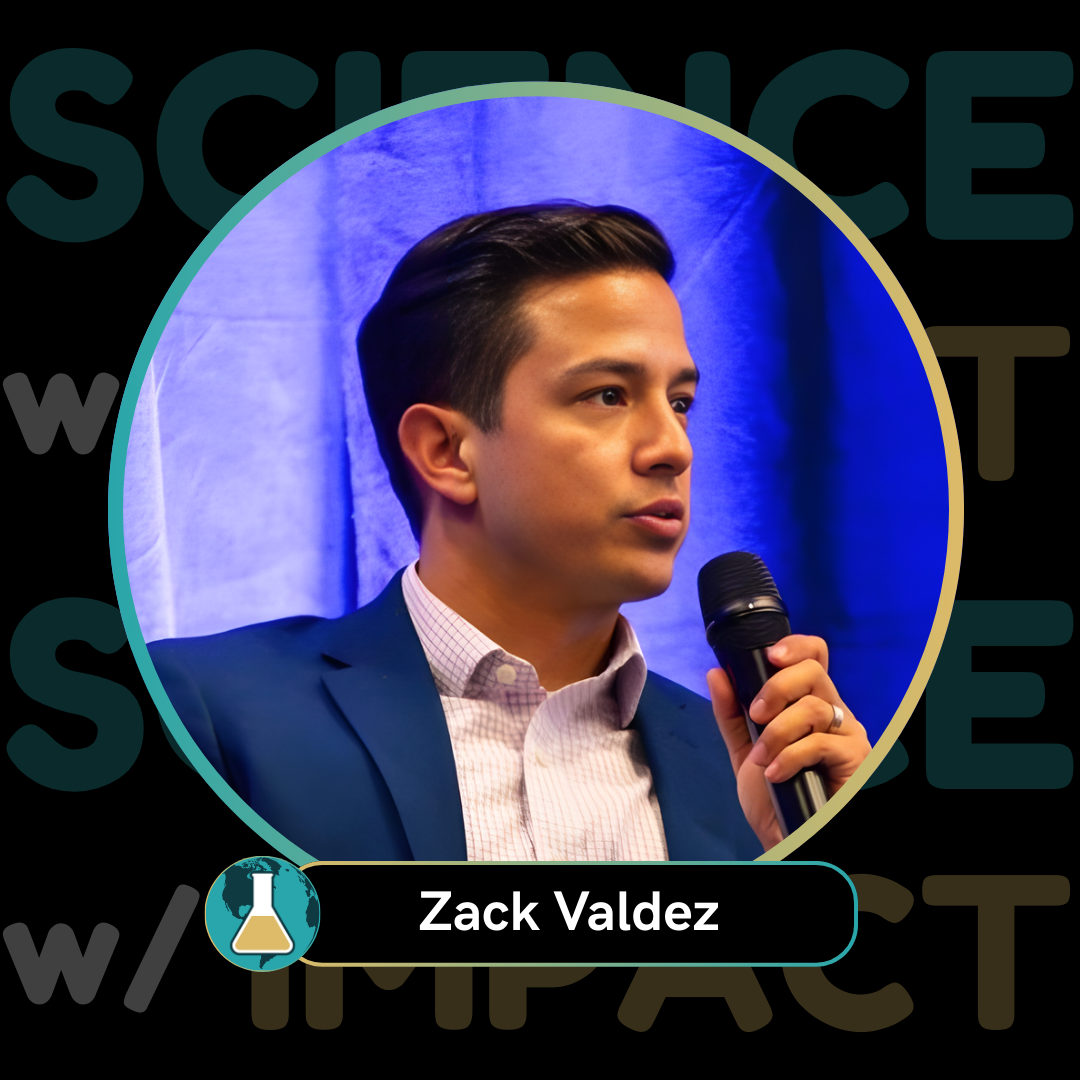
"I was a soccer player before I was a scientist," Zack reflects. "As I think about interdisciplinary approach, it's not only the science aspect, but it's the ability to communicate science and find different sciences and how they operate together." That early experience on soccer teams taught him something crucial: how to explain complex ideas to people who weren't scientists—a skill that would become central to his career.
The Arctic Refuge Lesson
His research focused on biofuels and carbon cycling in agricultural systems, exploring alternatives to traditional corn ethanol. His transition into policy revealed how scientific expertise translates—or fails to translate—in decision-making environments. Working in the U.S. Senate on legislation to protect the Arctic National Wildlife Refuge, Zack experienced a humbling lesson about communication.
"I built this really long report. I had footnotes. I had all the science stuff that we were taught to do as good scientists," he recalls. "And my boss was like, okay, well I want you to break that down to a page... And so I gave him that and he is like, all right, now I just want a half a page and I want a chart... then he is okay, if the senator's gonna use this, it needs to be one line and a visual."
The final message that resonated? A photograph of caribou migrating through the refuge. "The whole time I'm thinking, I did all this research to show you why economically it's not feasible, like environmentally, how it's gonna impact people. All of the science that you needed. And they were like, yeah, but this is gonna resonate with the general public more."

This experience revealed an important truth:
"Science is not the first tool that policymakers think about when they're writing legislation. They want to know what's the communication strategy, who are our members, who are our donors? Like how does this affect the local economies of these communities?"
How to Translate Your Research Across Sectors
This experience revealed something essential: science is not the first tool policymakers reach for when writing legislation. They prioritize communication strategy, constituents, donors, and local economies. For scientists who want their work to influence decisions beyond academia, understanding these broader considerations—and learning to translate research accordingly—becomes critical.
Based on Zack's experience navigating academic research, congressional policy work, federal agencies, and industry, here's practical guidance for expanding your scientific impact across sectors:
Start by Understanding Your Audience
Effective translation begins with a simple but powerful practice: ask questions first. Before explaining your research, find out what people already know. Zack demonstrates this when discussing biofuels: he asks whether someone knows about corn ethanol, whether they've noticed the 10% ethanol label at gas pumps, and whether they understand environmental trade-offs.
The same scientific concept requires different framing depending on who's listening. With another scientist, Zack might discuss molecular carbon structures or soil biogeochemistry. For policymakers, he focuses on strategy: Is there biofuel production in your district? What are the economic implications? For the general public, he connects to everyday experience: You've seen that ethanol label—do you know where it comes from and what impact it has?
Practice the Condensation Exercise
Take a recent publication and distill it progressively: full paper to one-page summary, then half a page with one visual, then one sentence and one image. This isn't about abandoning rigor—it's about identifying what resonates. Sometimes a photograph communicates stakes more effectively than pages of analysis.
Rarely do scientists take time to condense their work this way, yet this skill directly enables impact through policy influence, funding acquisition, startup formation, and public engagement.
Build Networks That Open Doors
For scientists from underrepresented backgrounds, strong professional networks aren't optional—they're essential infrastructure. Zack emphasizes joining organizations like:
SACNAS (Society for Advancement of Chicanos/Hispanics and Native Americans in Science)
A national organization that supports scientists from underrepresented backgrounds through leadership programs, conferences, and networking opportunities. Their programs include the Leadership Programs and Student Leadership Institute (LPSLI).
SHPE (Society of Hispanic Professional Engineers)
focuses on supporting Hispanic engineering professionals and students through professional development, networking, and career advancement opportunities.
Great Minds in STEM
An organization dedicated to promoting STEM education and career opportunities for Hispanic communities, providing scholarships, recognition programs, and professional connections.
NSBE (National Society of Black Engineers)
supports Black engineering students and professionals through mentorship, conferences, professional development, and advocacy for representation in engineering fields.
AISES (American Indian Science and Engineering Society)
serves Indigenous students and professionals in STEM fields, offering scholarships, conferences, and resources to build community and advance careers in science and engineering.
to create connections that others might access through institutional prestige or family networks.
But don't limit networking to your field. Connect with business owners, community leaders, and professionals in other industries who can tell you when you're being too technical or using jargon that creates barriers. These diverse relationships help you understand how your communication lands with non-specialist audiences.
Zack's policy fellowship came from being passionate and conversational at a science communication competition, not from being the most rehearsed. As the organizers told him: "When you walked in the room, you talked to everybody in the room. When you got up there, you owned what you were saying and you were excited about it. You weren't rehearsed—this was something that you cared about. And that shines."
Authenticity matters. Passion matters. Both are amplified when you have strong relationships that create opportunities to share your work.
Develop Your Whole Self, Not Just Your Science
Science should be only a portion of who you are. Your personality, interests outside the lab, and ability to connect with people across contexts all amplify your scientific impact. Find people who share interests beyond your research—whether that's soccer, cooking, travel, or anything else—and build genuine relationships.
These connections often lead to unexpected opportunities that don't come through formal applications or traditional channels.
Translating Science Across Sectors: A Practical Roadmap
1. Master Audience-Centered Communication
Start with questions, not explanations. Before presenting your research, ask what your audience already knows. This simple practice transforms how you frame your message.
Practice the condensation exercise: Take a recent publication and distill it progressively:
- Full paper → One page summary
- One page → Half page with one visual
- Half page → One sentence and one image
The point isn't to abandon rigor—it's to identify what resonates. As Zack learned working on Arctic policy, sometimes a photograph of migrating caribou communicates stakes more effectively than 30 pages of environmental impact analysis.
2. Build Strategic Networks
Join organizations intentionally. For scientists from underrepresented backgrounds, professional networks are essential infrastructure, not optional networking. Organizations like SACNAS, SHPE, Great Minds in STEM, NSBE, or AISES create connections others access through institutional prestige.
Connect beyond your field. Seek out business owners, community leaders, and professionals outside science who can tell you when you're being too technical. These relationships help you identify communication barriers you might not otherwise see.
Prioritize authenticity. Zack's policy fellowship came from being passionate and conversational at a science communication competition, not from being the most rehearsed. Let your genuine excitement about your work shine through.
3. Develop Interdisciplinary Adaptability
Follow curiosity across boundaries. Zack moved from engineering to physics to biogeochemistry by staying curious about energy systems. Each discipline offered new tools that informed the next move.
Practice translation regularly. Whether on long bus rides or at coffee meetings, practice explaining your science to non-specialists. The ability to adjust your message for chemists, policymakers, and the general public becomes second nature with consistent practice.
Recognize that science isn't always the first tool. Policymakers prioritize communication strategy, constituents, donors, and local economic impacts. Understanding how your research fits into these broader considerations increases your influence.
4. Give Back Without Expectation
Be the person you needed. Zack coaches neighborhood soccer kids and tells them about being a scientist, judges science fairs, and mentors students from underrepresented backgrounds. These actions create pathways for the next generation.
Remember that personality matters. Science should only be a portion of who you are. Your character, interests, and ability to connect with people amplify your scientific impact.
Measuring Your Progress
You'll know these strategies are working when:
- People ask you questions after hearing about your research
- You can articulate your work's significance in multiple ways for different audiences
- Your network includes people across disciplines and sectors
- Opportunities emerge from authentic connections rather than formal applications
The core insight:
Your research travels as far as your ability to explain why it matters to people who aren't experts.
Start practicing these skills today, and you'll expand the reach and relevance of your work across sectors.
Key Lessons for Broadening Impact
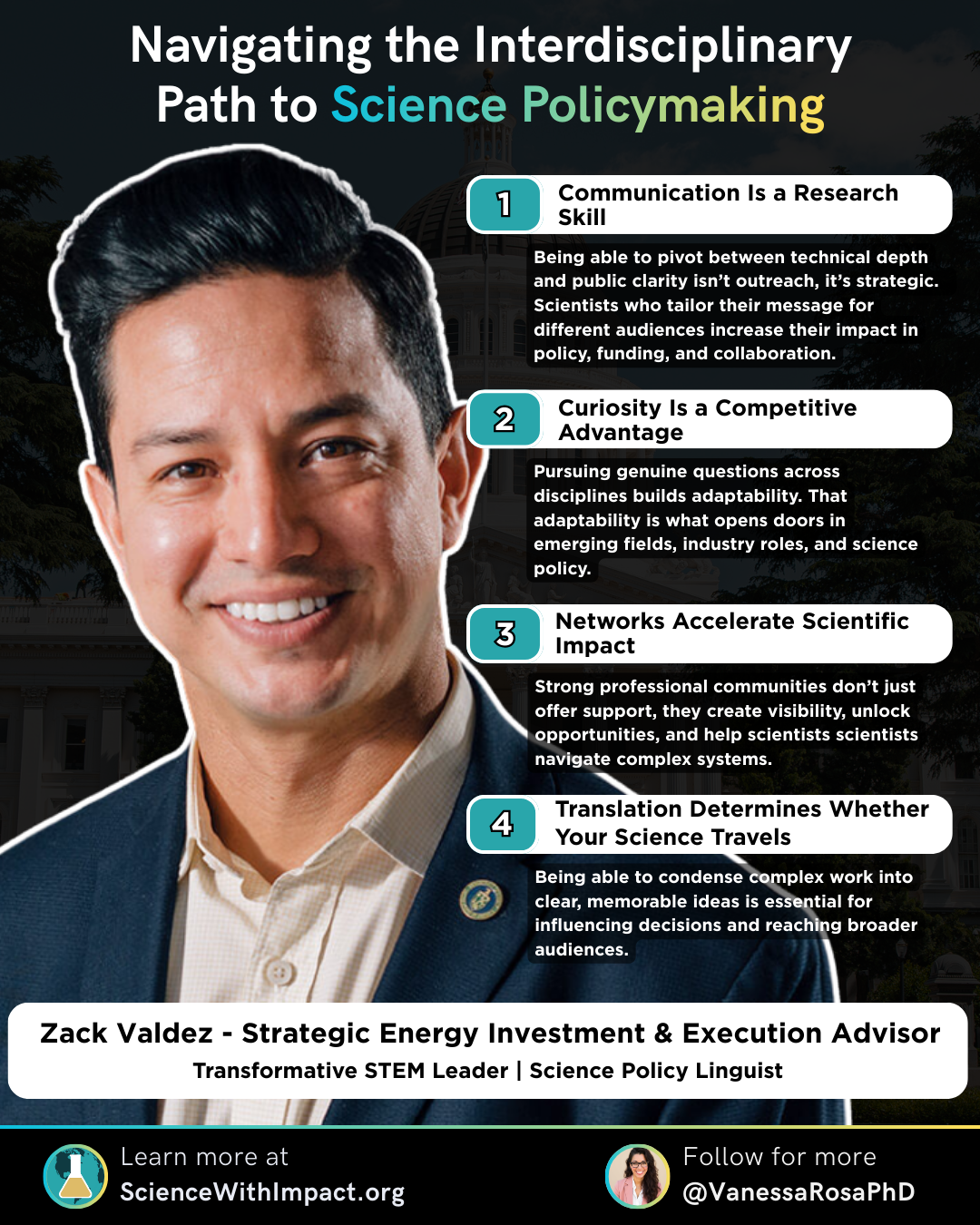
Communication Is Strategic
Translating complex research into accessible messages isn't "dumbing down" science—it's strategic thinking.
Zack's experience condensing a 30-page report into one line and a photograph revealed how policymakers and the public process scientific information differently than researchers do. The caribou photograph communicated the stakes of Arctic drilling more effectively than detailed environmental impact assessments because it connected emotionally and immediately with people's values. Scientists who learn to distill their work into clear, memorable ideas increase their influence in policy discussions, funding decisions, and public understanding. The skill isn't about sacrificing rigor—it's about knowing your audience and choosing the right level of detail for the context.
Curiosity Drives Adaptability
Following genuine questions across disciplines builds the flexibility that opens unconventional career doors.
Zack's path from engineering to physics to biogeochemistry to policy wasn't random—it followed his curiosity about energy systems and their societal impact. Each discipline offered new tools and perspectives that informed the next move. His interdisciplinary training prepared him to work across sectors because he'd already practiced integrating different scientific languages and methods. For researchers considering non-academic careers, this adaptability is invaluable. Emerging fields, industry roles, and policy positions often require synthesizing knowledge across domains. Curiosity-driven exploration during training builds exactly that capacity.
Networks Enable Impact
Strong professional communities create visibility, unlock opportunities, and provide support for navigating complex systems.
Zack emphasizes that networks are particularly essential for scientists from underrepresented backgrounds who may not have access to the institutional prestige or family connections that open doors for others. Organizations like SACNAS provided him with mentorship, skill development, and relationships that led directly to his policy fellowship and subsequent career opportunities. But he also stresses connecting with people outside your scientific field—business owners, community leaders, professionals in other industries—who can help you understand how your communication lands with non-specialist audiences. These diverse relationships amplify the reach and relevance of your work.
Translation Determines Reach
Your research travels as far as your ability to explain why it matters to people who aren't experts.
When Zack talks about biofuels, he adjusts his message based on his audience: molecular carbon structures for chemists, soil ecosystem impacts for earth scientists, district-level production for policymakers, and the ethanol label on gas pumps for the general public. This isn't about having different versions of the truth—it's about meeting people where they are and highlighting the aspects of your work that connect to their priorities and experiences. Scientists who master this skill don't just publish papers that sit behind paywalls. They influence decisions, shape public understanding, and create pathways for their research to inform action.
Applying This to Your Work
Consider a current research project or recent publication. Can you articulate its significance in three different ways: for a fellow specialist, for a policymaker, and for a general audience? Try the exercise Zack described—condense a complex paper to one page, then half a page with a visual, then one sentence and an image. What gets lost? What becomes clearer?
Think about your professional network. Are you connected primarily to people in your specific field, or do you have relationships across disciplines and sectors? What organizations could you join that would expand your network and expose you to different perspectives? Who in your current network could help you practice translating your work for non-specialist audiences?
Reflect on how your scientific identity connects to the impact you want to create beyond publications. What communities do you want to reach? What problems do you want your expertise to help solve? How can your communication choices and career decisions align with those broader goals?
Conclusion
Scientific expertise reaches its full potential when it travels beyond academic journals and conference rooms into policy discussions, industry decisions, and public conversations. Zack Valdez's journey from engineering physics to biogeochemistry to the U.S. Senate demonstrates that this translation isn't automatic—it requires intentional skill development in communication, network building, and interdisciplinary adaptability.
The researchers who shape decisions and influence outcomes are those who can condense complexity without losing meaning, who build relationships across sectors and disciplines, and who remain curious about how their work connects to broader societal challenges. These aren't peripheral skills for scientists interested in "alternative careers"—they're core competencies for anyone who wants their research to matter beyond citation counts.
Start practicing these capabilities now. Take your current project and explain it to someone outside your field. Join a professional organization that connects you with scientists from different backgrounds. Follow your curiosity when it leads across disciplinary boundaries. Give back to communities that supported your journey.
Your research has the potential to inform better decisions, solve pressing problems, and create pathways for the next generation. The question isn't whether your science is valuable—it's whether you're developing the skills to help that value travel where it's needed most.
Resources and Tools
Professional Organizations for Underrepresented Scientists
- SACNAS (Society for Advancement of Chicanos/Hispanics and Native Americans in Science): sacnas.org
- SHPE (Society of Hispanic Professional Engineers): shpe.org
- Great Minds in STEM: greatmindsinstem.org
- NSBE (National Society of Black Engineers): nsbe.org
- AISES (American Indian Science and Engineering Society): aises.org
Science Policy and Communication Programs
- AAAS Science & Technology Policy Fellowships: aaas.org/programs/science-technology-policy-fellowships
- Christine Mirzayan Science & Technology Policy Graduate Fellowship Program: nationalacademies.org/mirzayan-fellowship
- ComSciCon (Communicating Science Workshop): comscicon.com
Connect With Us
Thank you to Dr. Zack Valdez for sharing his insights on navigating interdisciplinary paths and translating scientific expertise across sectors. His career demonstrates that meaningful impact often comes not from the next publication, but from learning to communicate your work in ways that resonate with policymakers, industry leaders, and communities who can benefit from your research.
Are you a research scientist or program director working to broaden participation and impact in your field? We'd love to hear about your challenges and successes. Schedule a consultation to discuss how Science with Impact can support your broader impacts strategy with evidence-based frameworks and practical tools.
To our readers: Thank you for investing your time in learning how to connect science and society. Your commitment to meaningful impact—beyond traditional metrics—is exactly what our scientific community needs. Together, we're building a more inclusive, impactful, and purpose-driven scientific enterprise.
Let's collaborate
Schedule a meeting with our founder, Dr. Rosa, to explore how we can help broaden your impact.
Learn More
1. Evidence-based impact measurement and communication.
2. Lasting national and local partnerships with STEM organizations.
3. Impact-centered professional development for students.


Member discussion